What is Interactive Voice Response (IVR)?
August 31, 2023
5 Minutes


Contents
Interactive Voice Response (IVR) can be defined as an automated telephony technology that allows call center software systems to interact with callers through voice and prewritten call center scripts using touch-tone inputs. This streamlines various tasks and inquiries without the need for human intervention. It is a technological advancement that is reshaping the dynamics of customer-business interactions. If you've ever dialed a customer service hotline, conducted a phone-based banking transaction, or scheduled an appointment with a healthcare provider, there's a strong chance that you've interacted with IVR systems.
"Have you ever heard voice recordings when calling customer service? Have you ever wondered how call centers use a pre-recorded voice system to provide you with information? Well, Interactive voice response is the tool that makes it happen! So, what is IVR in a call center, and how does it work? In this article, we'll dive into the world of IVR, explore the different types of calls, and delve into their features. We will also learn about the tracking process and how to build an efficient Interactive Voice Response system. Let's get started!"
Sample IVR Voice Recording - “To know your account balance, press 1; to speak to our agent, press 2; for any other account-related issue, press 3; to hear the menu options again, press 4…”

What is IVR in a Call Center?
IVR stands for Interactive voice response. They are computerized systems that use voice recognition to help customers get what they need faster. They're a great tool for businesses because they can handle a lot of calls at once and send customers to the right department without any extra hassle. This lessens the workload of the customer service agents. Plus, it enriches the customer experience as they don’t have to wait on hold forever! So, IVRs are there to make things easier for businesses and their customers.
Never Miss a Post!
Stay updated with the latest insights on sales strategies, telecalling, team management, and more.
Interactive Voice Response System in Call Center: Basics
The goal of an Interactive voice response system is to address the caller's needs and offer them choices for obtaining the necessary information. This tool is utilized for incoming sales, assisting customers, and answering inquiries in BPOs & Call centers. IVR in call centers has become a crucial tool that provides 24/7 availability, shorter wait times, and higher success rates for the first call. Customized responses based on customer interactions create a more engaging experience, resulting in increased customer satisfaction and loyalty.
What are the different types of IVRs?
- Inbound Interactive Voice Response System: It aims to address caller's needs and provide them with options to obtain the necessary information. It is commonly used for inbound sales, customer service, and inquiries.
- Outbound Interactive Voice Response System: Businesses can use this tool to engage customers automatically through various channels like calls, texts, chatbots, and social media. It enables them to inform customers about promotions, new products, and appointments.
Let us look at the characteristics of the IVR call:
- Call routing
- Customer greetings
- Integration with CRM
- Multi-language support
- Surveys and feedback
Examples of IVR calls
You must have heard the following messages when calling a customer care center:
- Hello! Thank you for shopping with the [Name of the store] store.
- To track your order, please enter your tracking number.
- To check the status of your order, press 2.
- If you want to change your delivery address, press 3.
- For any further assistance, press 4.
- To speak with a customer service representative, press 5.
Interactive Voice Response Tracking Operations
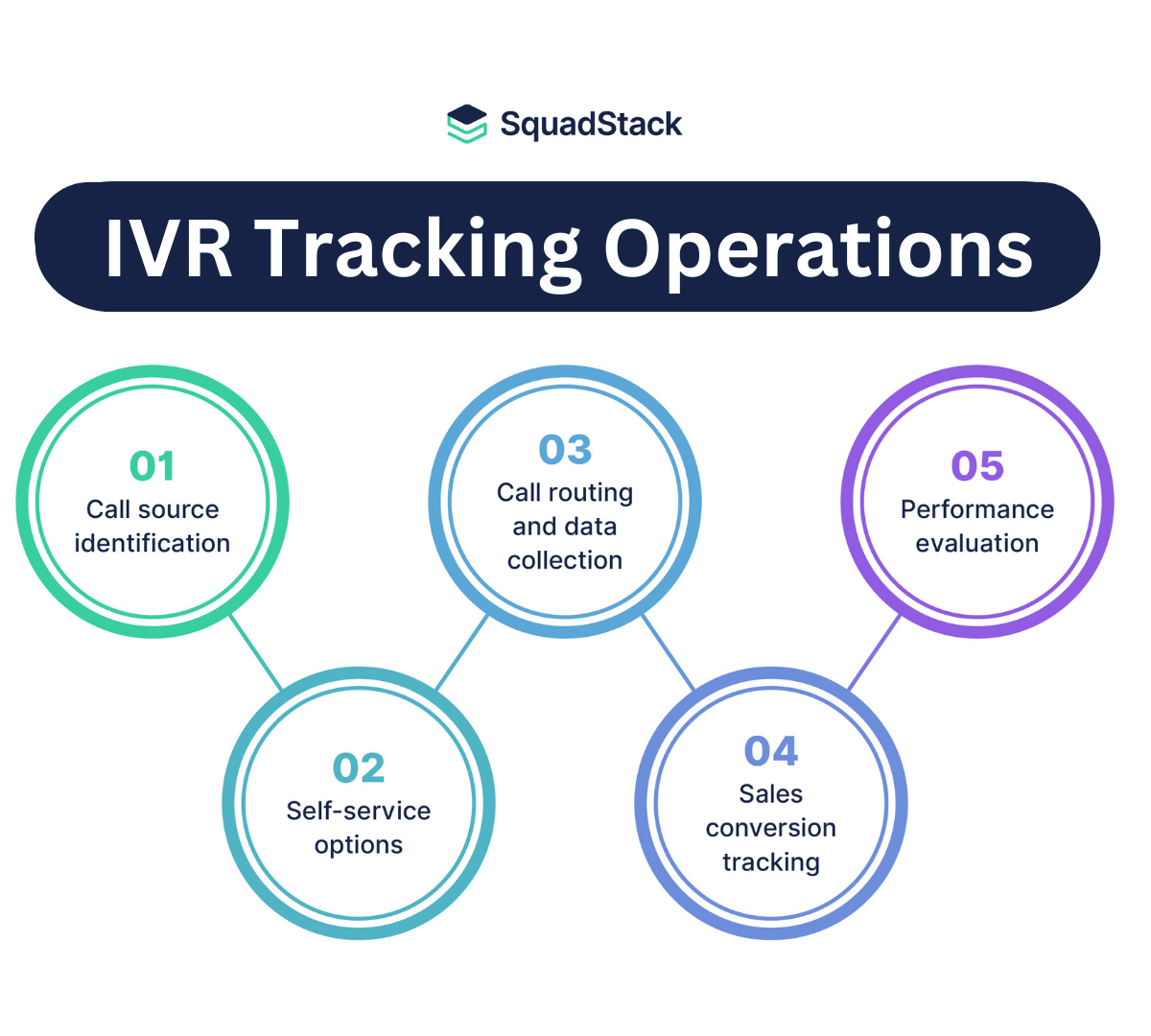
Interactive voice response tracking is a method that businesses use to monitor incoming calls using automated call center voice response systems. It enables businesses to collect essential data on their IVR system's performance and the effectiveness of call-handling processes. Interactive voice response tracking is used to monitor the performance of both incoming and outgoing calls. This process involves the following:
- Call source identification: To track the effectiveness of marketing channels like ads, online surveys, and social media posts, IVR tracking assigns unique phone numbers. When a customer calls one of these numbers, the IVR system can identify its source.
- Self-service options: Interactive voice response systems provide self-service options that enable callers to perform different tasks without talking to a call center agent. Some common self-service options in an IVR call include:
- Checking account balances.
- Making payments.
- Requesting information.
- Updating account details.
- Call routing and data collection: When you make a call, you are greeted by an IVR system with pre-recorded greetings and options. You can interact with the system by selecting the desired option(s), and the system records your responses, call duration data, and other important information.
- Sales conversion tracking: IVR tracking is a valuable tool for businesses and organizations to monitor customer actions, including sales conversions, purchases, calls, and service subscriptions. It allows businesses to evaluate the effectiveness of their Interactive voice response system.
- Performance evaluation: Businesses can evaluate their performance through IVR systems by analyzing the data they collect. This analysis can help identify areas that require improvement, such as unclear menu options or long wait times, within their system.
Benefits of Using IVR Solutions
Businesses can simplify customer interactions for inbound and outbound calls by leveraging IVR solutions. These solutions use pre-recorded voice messages and text-to-speech technology to automate calls. IVR solutions help businesses manage call volume, improve customer experiences, and streamline communication processes.
Some benefits of IVR solutions include:
- Cost-effectiveness
- Improved customer service quality
- 24-hour availability
- Enhanced call routing.
- Works on Pre-decided call center Script
IVR transaction
IVR refers to customer's interactions with automated systems when seeking self-service options. These interactions involve customers initiating calls and following prompts provided by the system to complete transactions. IVR transactions can be conducted over the phone or the Internet, including using credit cards to pay for goods or services call center agents provide. Let's have a look at the examples of IVR transactions:
- Order status check
- Account balance inquiry
- Fund transfer
- Appointment scheduling
- Customer feedback/surveys
- Login ID/password reset
- Product information

Building an IVR System with Squadstack
Building an IVR system with Squadstack can be a great way to streamline your company's customer service experience. It helps you customize the prompts, set up call routing, and even integrate with your existing CRM system. Here’s how you can build the IVR system with SquadStack calling services:
- Consider using SquadStack's IVR solution and have a closer look at its benefits and features to achieve your business objectives.
- By integrating SquadStack's technology with your CRM, you can gain access to customer data and provide exceptional solutions.
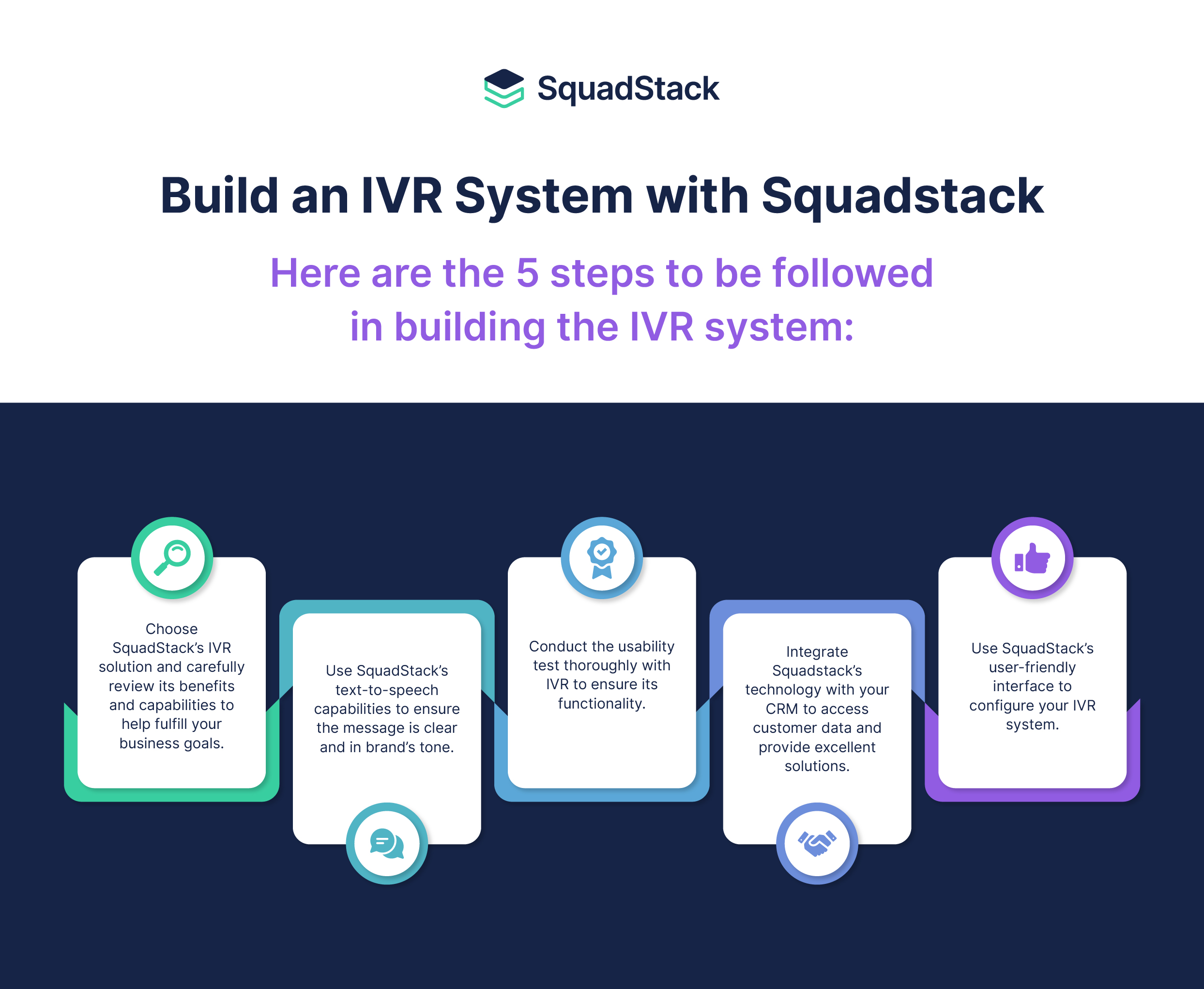
- With Squadstack's easy-to-use interface, you can customize your IVR system.
- Using Squadstack, you can qualify leads from small and medium-sized enterprises to set up demos with the inside sales team. These demos are doubly confirmed through WhatsApp and IVR outreach to minimize drop-offs.
To learn more about why leading companies trust Squadstack to build the IVR system, Take a demo to see how we can help you to grow your business.
FAQ's
What are the best practices of IVR?

IVRs best practices include precise menus, clear call paths, prompt updates, and performance monitoring for further improvement.
Can IVR provide personalized responses?
Yes, it provides personalized responses based on the customers' call history.
Does IVR support multi-channel communication?
Yes, it supports multi-channels like chatbots, emails, texts, and social media for an excellent customer experience.
Can IVR be customized for industries?
Yes, it can be customized according to the menus and commands for e-commerce, banking, and healthcare industries
Can IVR replace call center agents?
No, it can't replace the agents because they can resolve complex issues with the help of IVR technology.
Book a Consultation Now

Book a Consultation Now