

Buyers ask ChatGPT who to shortlist. Find out if it names you.
GEO Radar puts your buyers' questions to ChatGPT, Gemini, Perplexity, Claude, Copilot, DeepSeek and Google's AI answers every week. You see who gets named, which pages the answers came from, and what on your own site is stopping AI crawlers from reading you.
Get the source code
We'll email you the files. You run it on your own server.
There are two reasons you get left out of AI answers.
The pages LLMs trust don't mention you, or the LLMs can't read your own site properly. Most teams only check the first. GEO Radar checks both, so you fix the right thing.
What LLMs say about you
What LLMs can read on your site
See every answer, and the page it came from.
Add the questions your buyers ask and the competitors you lose deals to. GEO Radar asks each LLM on a schedule and keeps every answer, so any number on the dashboard traces back to what was actually said.
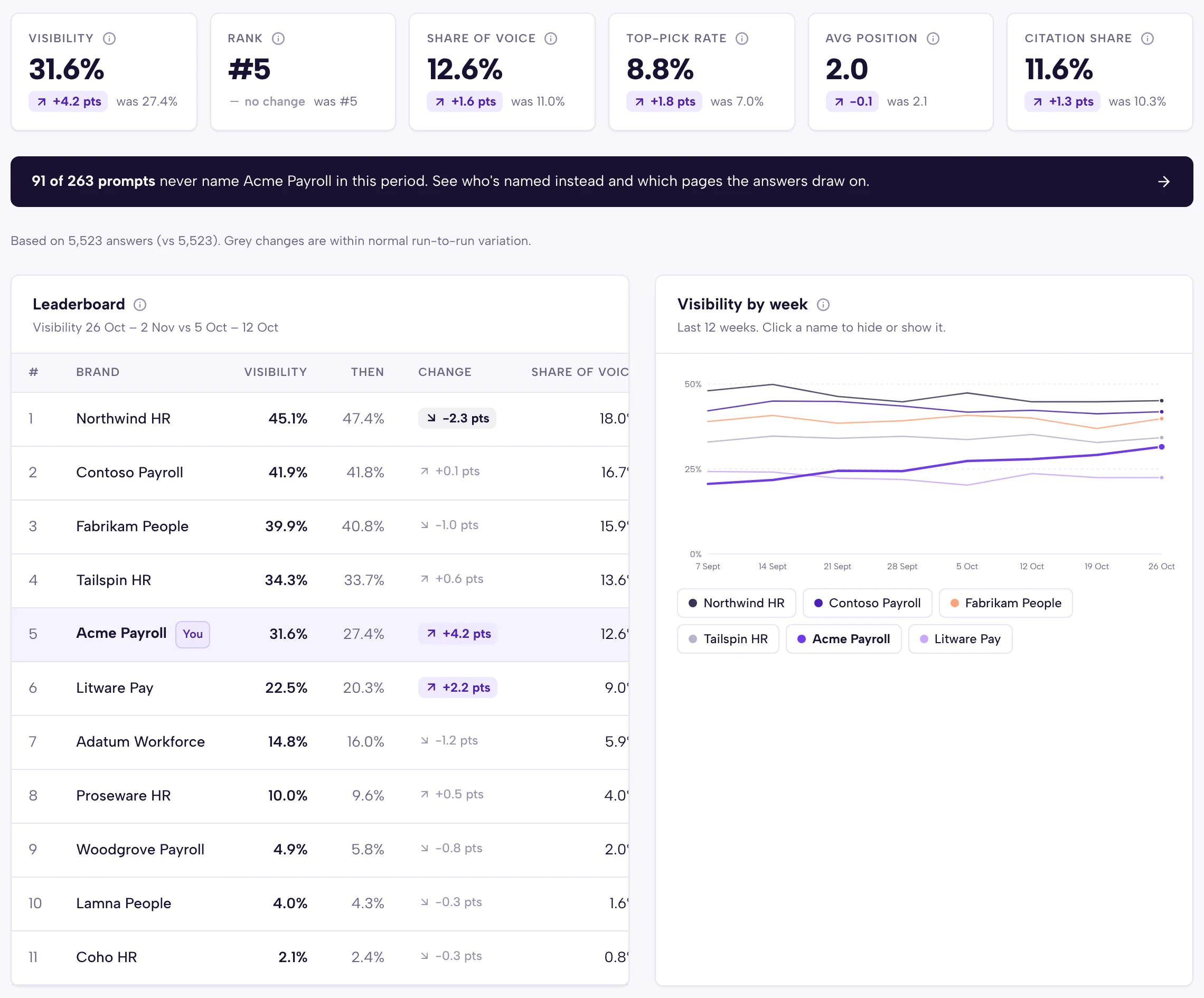
Who's winning your category right now
Visibility, rank, share of voice and citation share for you and every competitor, against the last period.
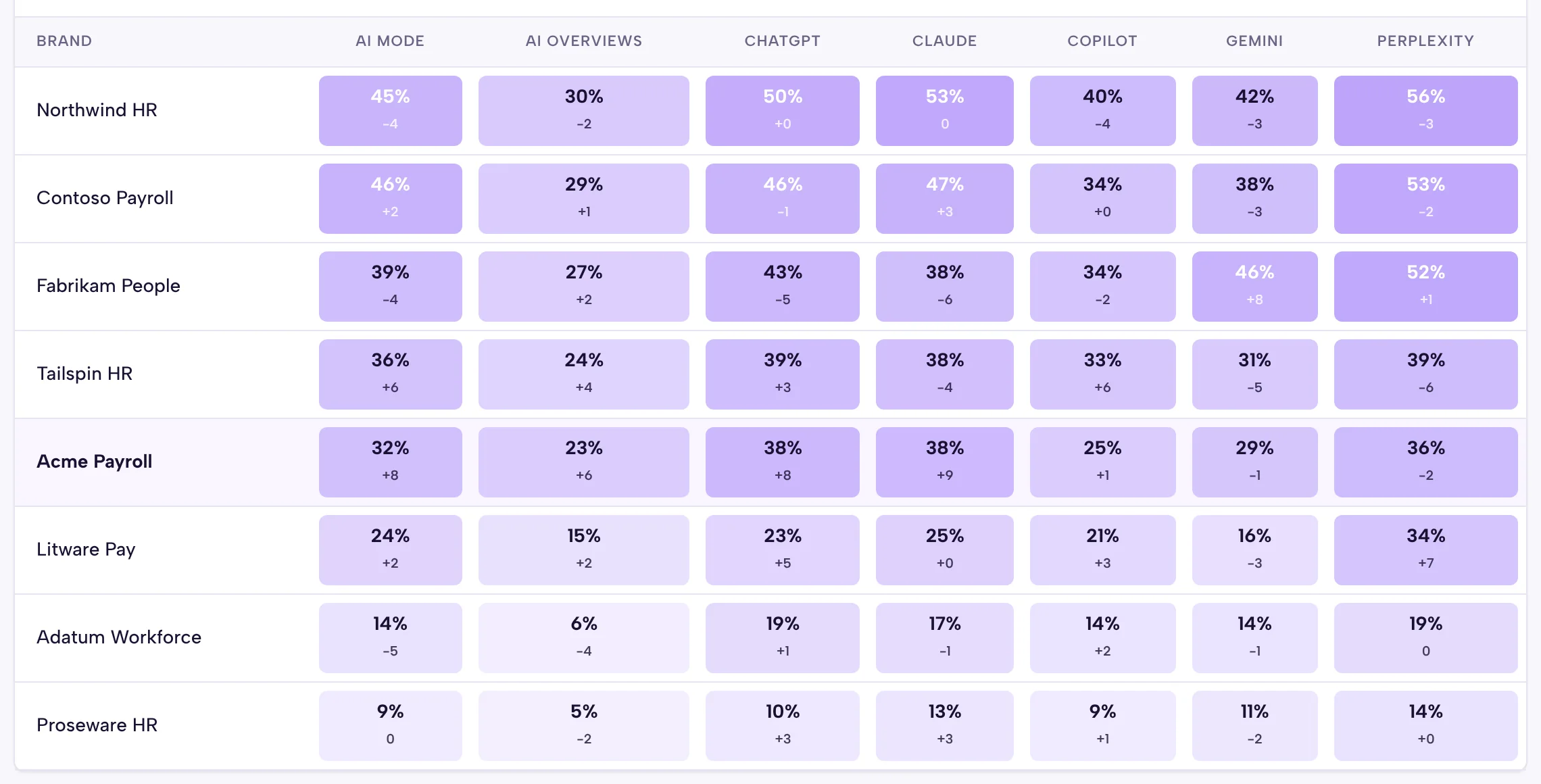
Strong on ChatGPT, missing on Gemini?
Every brand on every LLM in one grid, so the weak spot is obvious.
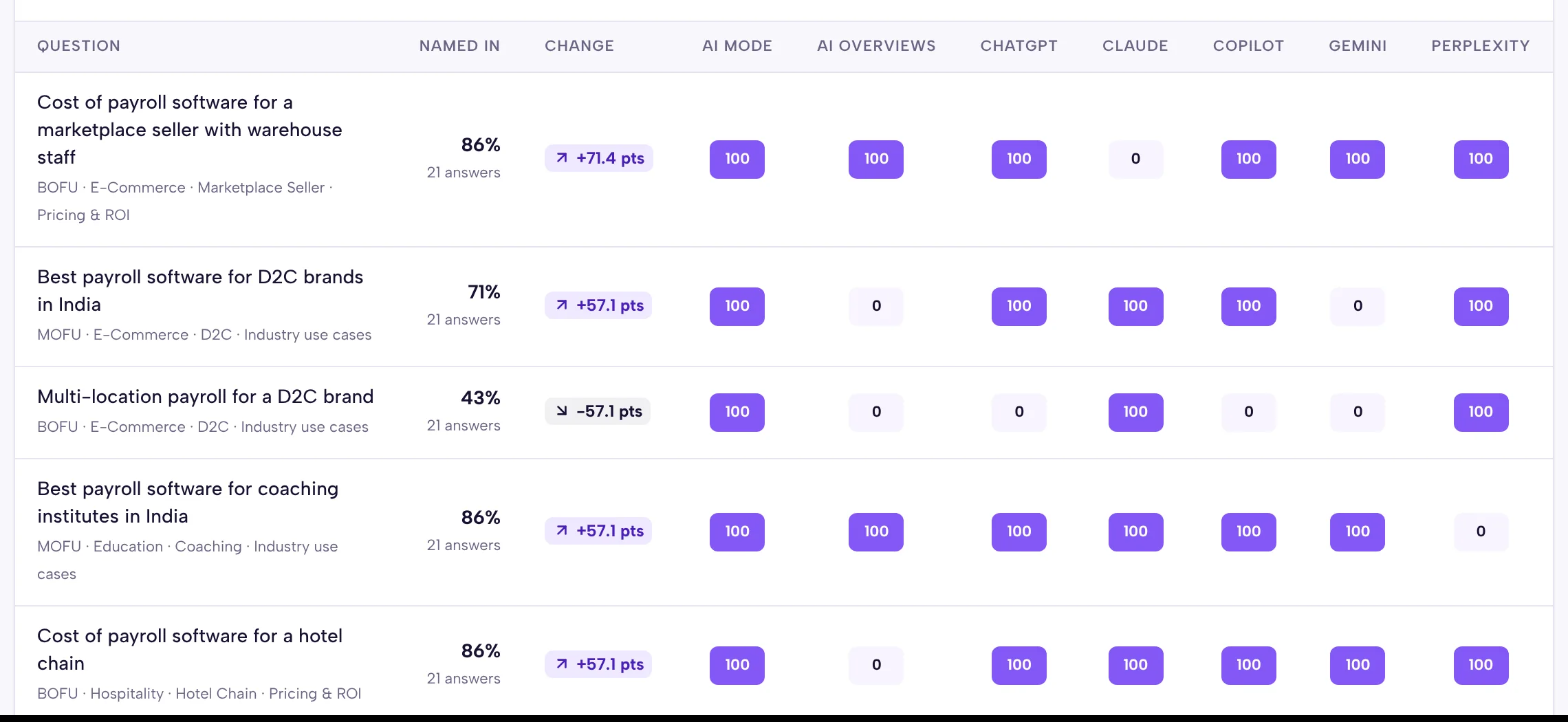
The questions you win and lose
How often you're named for each buyer question. Click through to read what each LLM said.
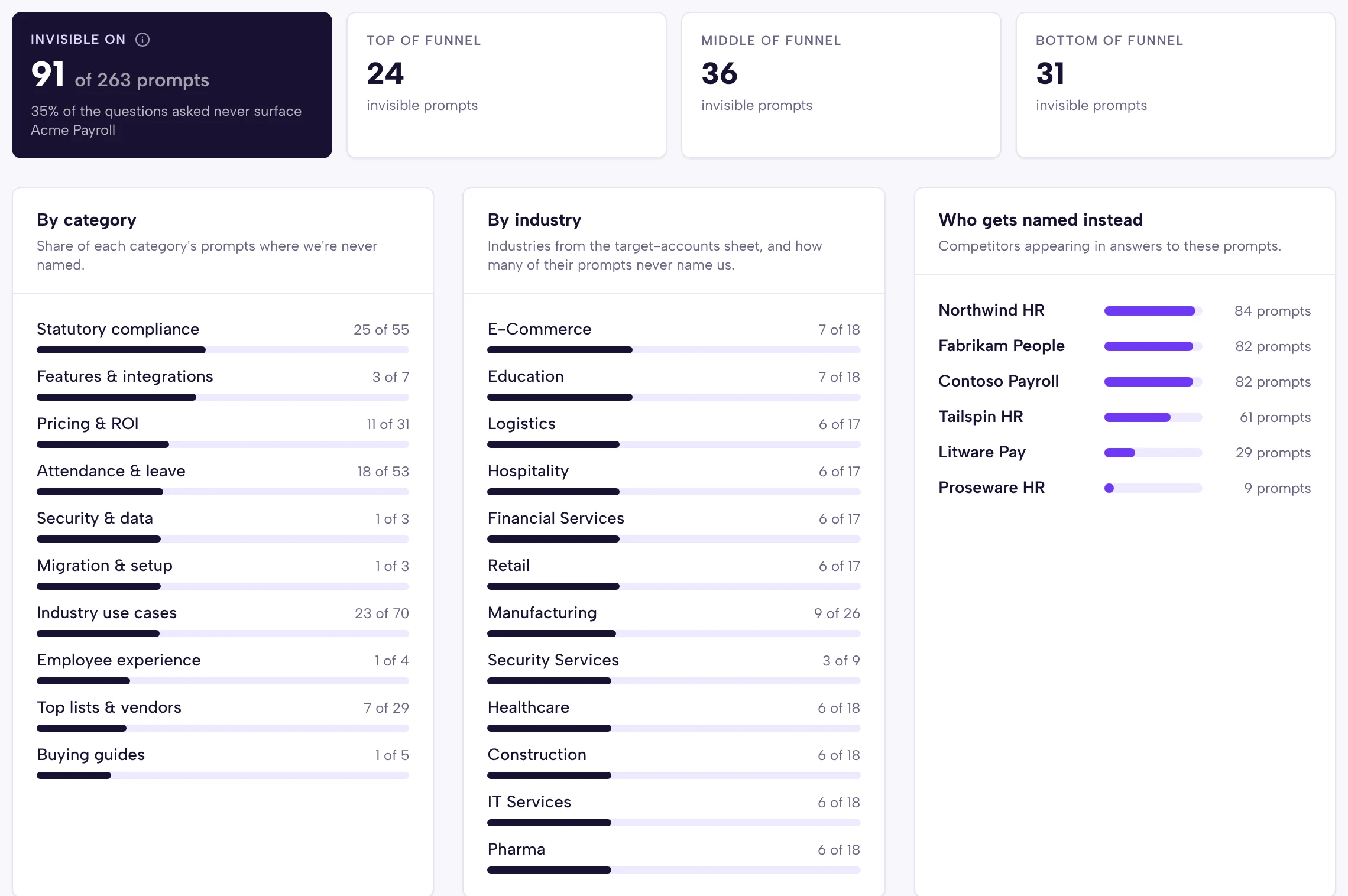
Questions where nobody names you
Sorted by funnel stage, category and industry, with the brands that get named instead.
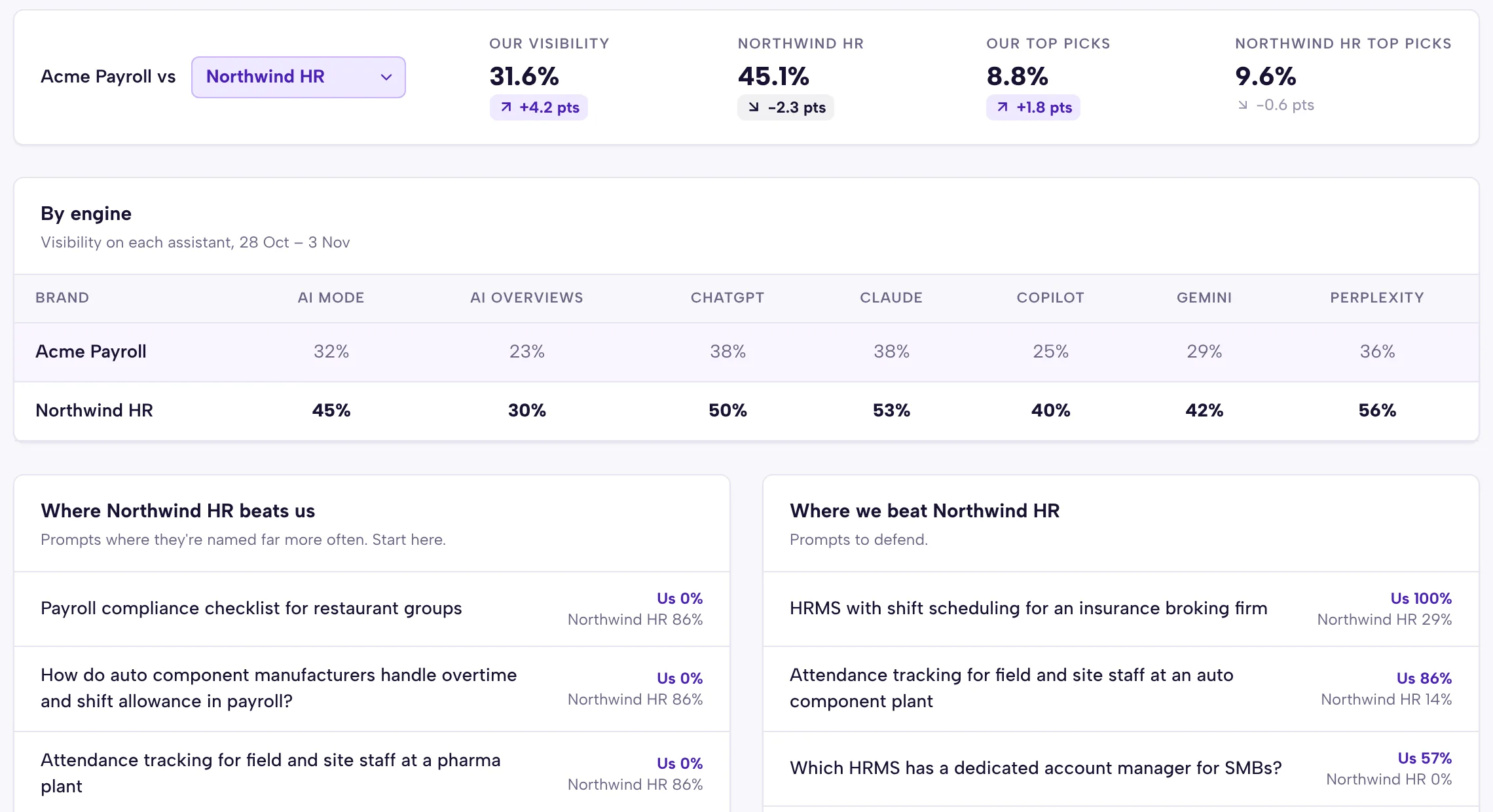
You vs. your toughest competitor
Prompt by prompt: where they get picked over you, and where you need to hold your ground.
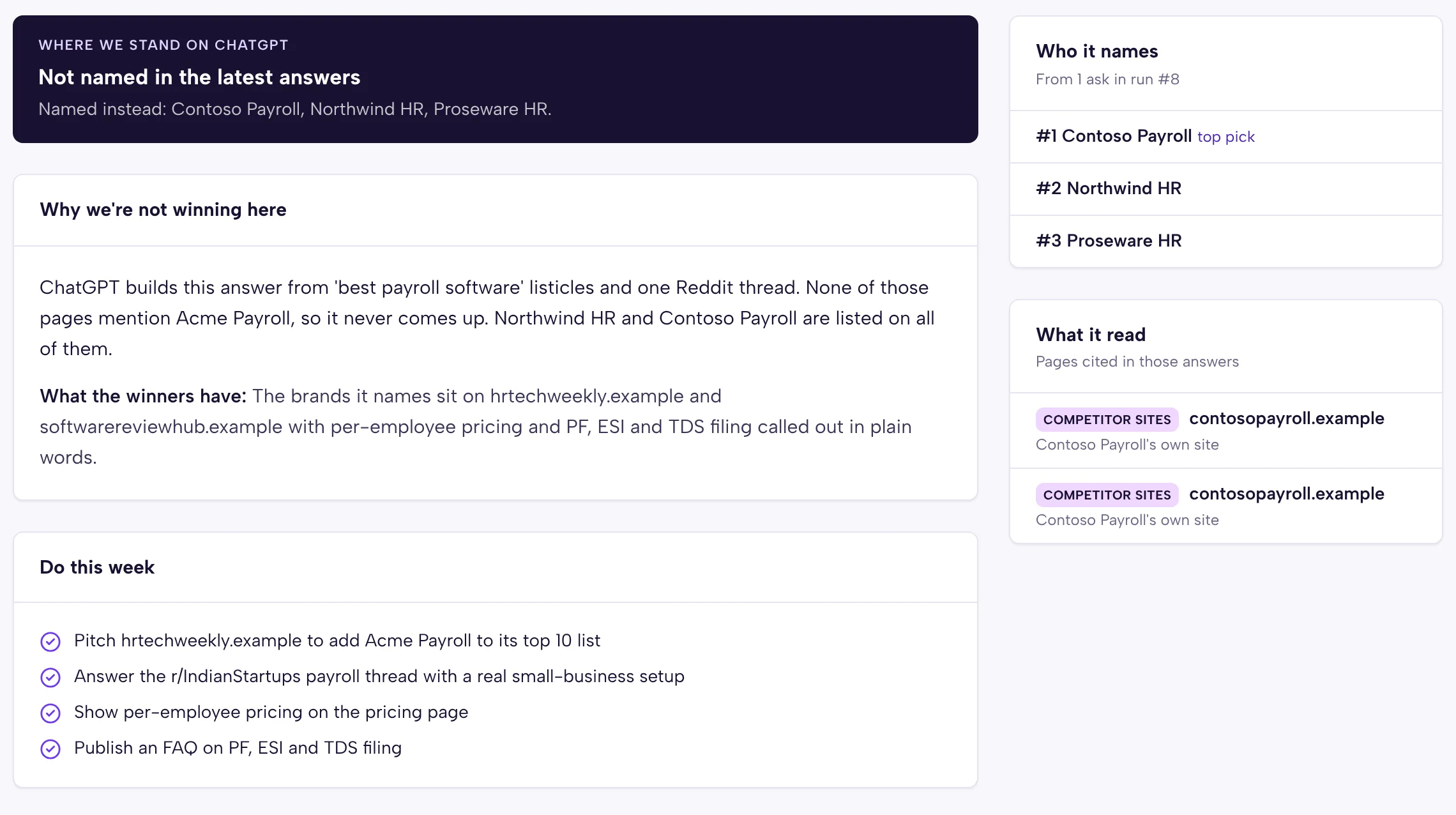
What to do about each lost question
Why you're losing it, what to publish, which lists to get on, and what to start this week.
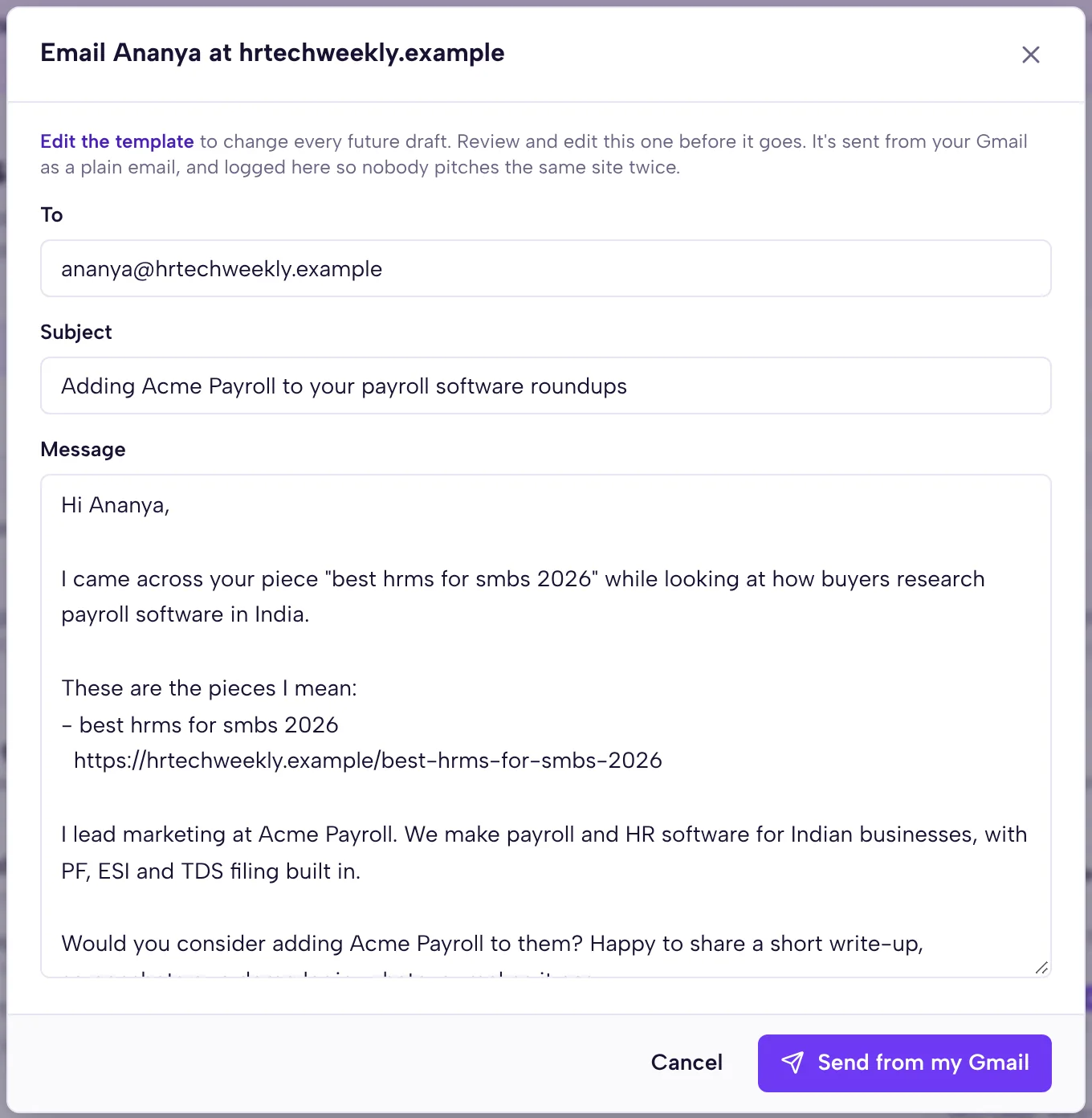
Get onto the lists LLMs quote
For every page that names competitors and leaves you out, find the person who runs it and send a drafted pitch from your own Gmail.
Screens show sample data. Brands in the examples are fictional.
Make sure AI crawlers can actually get in.
One robots.txt line or CDN setting can lock out GPTBot or PerplexityBot, and nobody notices for months. Every week GEO Radar crawls your site the way they do, runs 73 checks across 11 areas, and hands you one fix list.
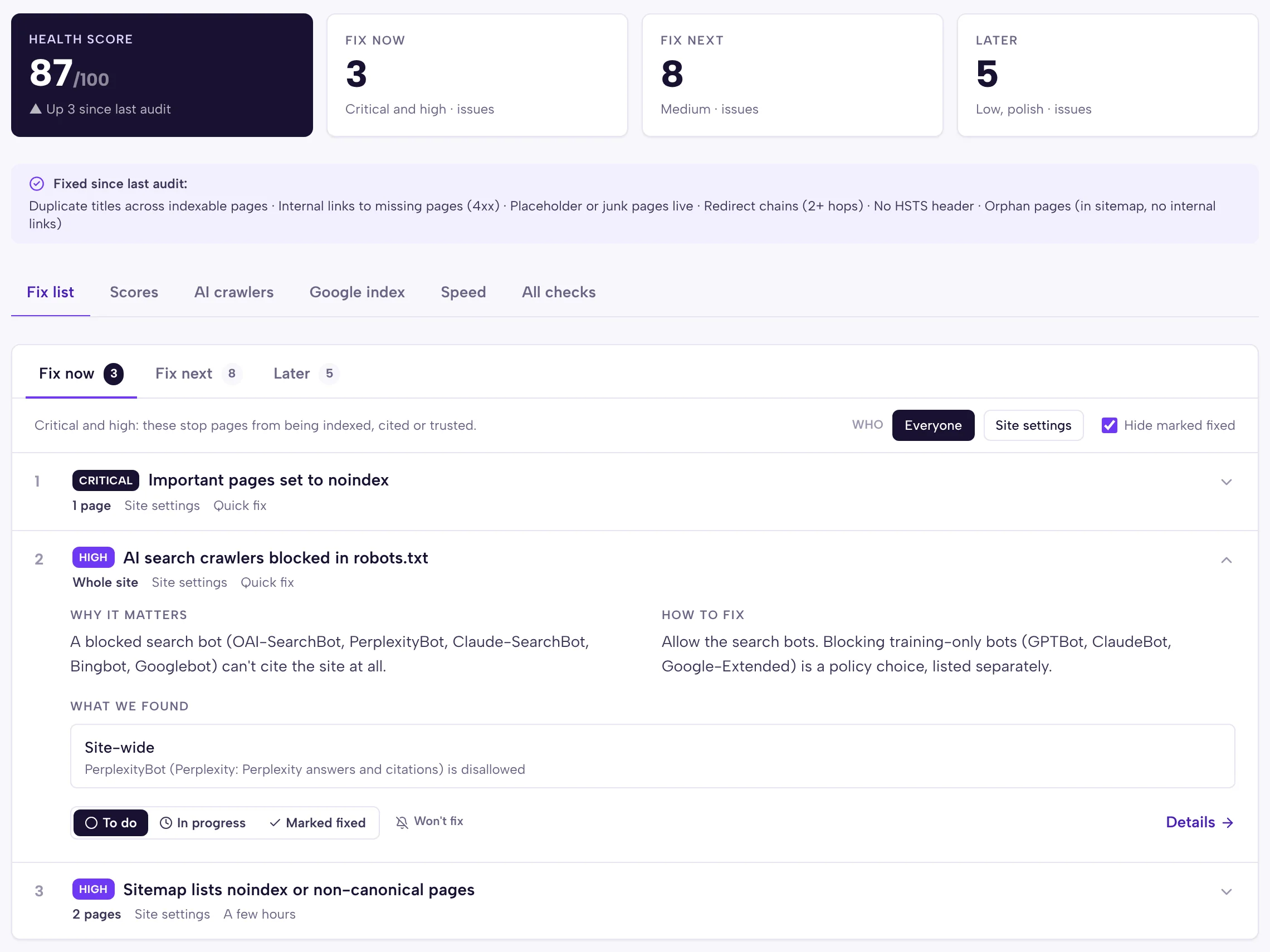
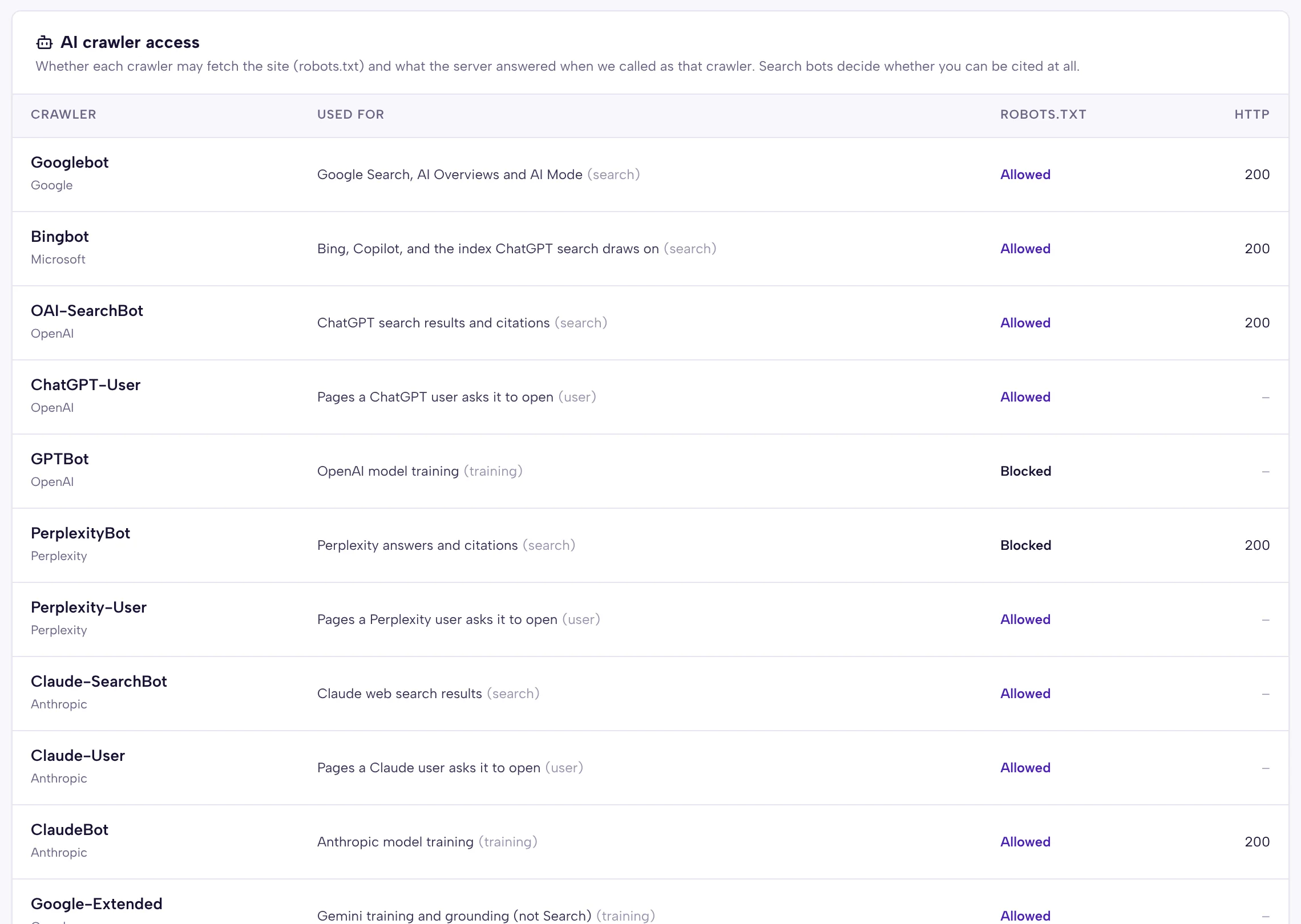
Each crawler, tested for real
GEO Radar reads your robots.txt for 16 crawlers, then requests your pages as each one. That catches the firewall rule that blocks a bot your robots.txt allows.
Fixes in order
Every issue says why it matters, how to fix it, who usually does it and roughly how long it takes. The worst problems on your most important pages come first.
Done means done
Mark an issue fixed and the next audit checks it. The health score shows what changed since last time.
What Google skipped
Connect Search Console to see pages Google crawled but didn't index, or where it chose a different canonical. Add a free Google API key for Core Web Vitals from real Chrome users.
Written for AI answers
Flags text that only loads with JavaScript, articles with no date or author, missing schema, and pages too long to quote cleanly.
Costs nothing to run
The audit is plain HTTP plus Google's free APIs. If your site is on Webflow, each fix comes with Webflow steps.
You decide what it tracks and what it costs.
Your questions and rivals
Import the questions your buyers ask and the brands you compete with. Tag them by category, funnel stage and industry.
Only the LLMs you care about
Switch each LLM on or off. Track the ones your buyers actually use.
A bill you see first
Use your own API keys. The cost planner shows the monthly bill before you change anything, and every run shows what it cost.
Your schedule
Answer runs and site audits go weekly, fortnightly or monthly, or right now if you press run.
Up and running in an afternoon.
Ask for the code
Fill in the form and we'll email you the GEO Radar source files.
Host it yourself
Run it on your own server or cloud account. Your prompts, competitors and results stay with you.
Add your brand and run
Add competitors, prompts, API keys and your site. See where you stand, then work through the fix list.
Find out what LLMs tell your buyers.
Free source code. Your server, your API keys, no licence fee.
Questions about GEO tools
What are the best GEO tools to track brand visibility in ChatGPT and other LLMs?
A good GEO (generative engine optimisation) tool covers the LLMs your buyers use, shows prompt-level results against competitors, shows which sources each answer cites, and tells you what to do next. GEO Radar does all four across ChatGPT, Gemini, Perplexity, Claude, Copilot, DeepSeek, Google AI Overviews and AI Mode, and adds a weekly technical audit of your site. It is free, and you host it yourself.
Is there a free GEO or AEO tool?
Yes. GEO Radar is free. You get the full source code, host it on your own server and connect your own LLM API keys. The only cost is what you use with those providers, and the tool shows you that cost before every change and for every run.
How do I check if ChatGPT recommends my brand?
Ask ChatGPT the questions your buyers ask and note which brands it names. One check is not enough, because answers change from run to run. A GEO tracker runs the same prompts on a schedule across LLMs and shows how often you are named compared with each competitor.
How do I check if AI crawlers can access my website?
Check your robots.txt rules for each crawler, such as GPTBot, OAI-SearchBot, PerplexityBot, ClaudeBot and Google-Extended. Then request your pages with each crawler's user agent, because a CDN or firewall can block a bot that robots.txt allows. GEO Radar does both for 16 crawlers every week and flags any AI search crawler that is blocked.
What technical issues stop AI search from citing my site?
Common ones are AI search crawlers blocked in robots.txt, important pages set to noindex, content that only appears after JavaScript runs, broken internal links, wrong canonicals, and articles with no date or author. GEO Radar checks 73 issues like these across 11 areas and ranks the fixes by impact.
How do I get my brand mentioned by ChatGPT, Gemini and Perplexity?
LLMs build answers from the pages they read: listicles, review sites, comparison pages, forums and your own site. Get listed on the pages they cite for your category, publish clear comparison and pricing pages they can quote, and make sure AI crawlers can read your site. GEO Radar shows the pages behind each answer and builds a plan for every prompt you lose.
What is the difference between GEO, AEO and SEO?
SEO is about ranking pages in search results. AEO (answer engine optimisation) and GEO are about being named in the answers that AI assistants and LLMs give. The work overlaps, but GEO is measured by mentions and citations in answers, not by the position of a link.
Can I self-host a GEO tool?
Yes. GEO Radar comes as full source code that you run on your own server or cloud account, so your prompts, competitors and results are stored on your side. It is the first tool from SquadStack Labs, where SquadStack.ai releases the tools it builds for its own team.