Choosing the right AI voicebot has become a real challenge as the market is getting crowded with tools that all claim to be “smart” and “intuitive.” However, not all AI voicebots are built with the same features. The real difference lies in the features that shape how naturally AI Voicebots interact, how efficiently they handle queries, and how well they adapt to your business needs. In this blog, we’ll break down the key features to look for in an AI Voicebot and how SquadStack.ai has the best features among others. The right AI-based voicebot can completely change how smoothly your business handles customer calls and everyday tasks.
What really matters isn’t just how “advanced” the technology sounds- it’s how well it works in honest conversations. Does it understand people accurately? Can it adapt when callers speak naturally or go off-script? These are the things that separate an average voicebot from one that genuinely helps your team. In this blog, we’ll walk through the key features that make a voicebot worth your time and investment.

Core Features Every AI Voicebot Should Have?
The core features of a voicebot matter so much- they’re the backbone of every interaction. People want quick answers, smooth conversations, and zero frustration; they choose an AI voicebot that actually understands their customers and makes their lives easier. Whether it’s recognizing what someone is saying or responding naturally without sounding robotic, these essentials can make or break the experience.
A good AI voicebot should be easy to talk to, understand people without requiring repetition, and handle conversations without sounding stiff or confusing. These core features help prevent customer frustration and drop-offs mid-call. Think of them as the foundation: if these aren’t solid, no amount of advanced add-ons will fix the experience. Starting with the essentials makes it much easier to build a voicebot that people actually enjoy interacting with.
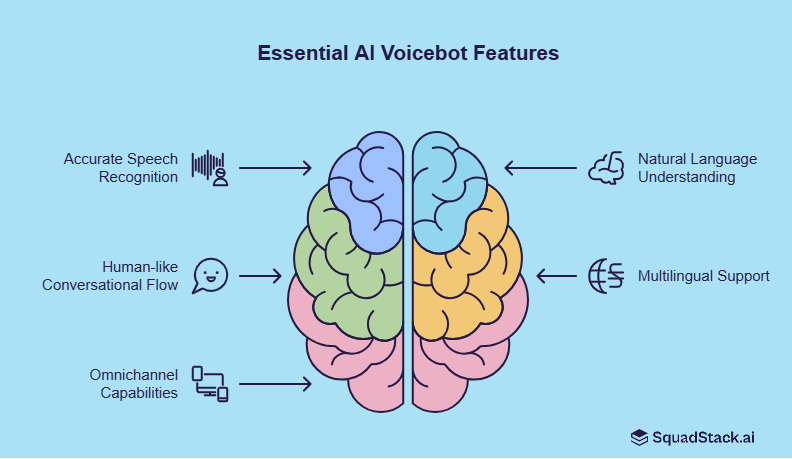
Accurate Speech Recognition (ASR)
The foundation of any voicebot is its ability to accurately understand what the caller is saying- even with background noise, accents, or different speaking speeds. A strong ASR engine reduces repeated prompts (“Sorry, could you say that again?”) and keeps the conversation flowing naturally.
- When someone calls your business, they don’t want to repeat themselves three times just to be understood. That’s why strong speech recognition is non-negotiable.
- A good ASR engine picks up different accents, speaking speeds, and even background noise without breaking the flow of the conversation.
- It should “get” what the caller is saying the first time, the same way a patient and attentive human agent would.
- When this part works well, the entire call feels smoother and more natural- no awkward pauses, no constant retries, and no irritated customers.
Natural Language Understanding (NLU)
Great voicebots go beyond hearing words- they interpret intent. Whether a customer says, “I want to check my loan status” or “What’s happening with my application?”, the voicebot should be able to understand the meaning, not just the phrasing.
- Understanding the actual intent behind someone’s words is what separates a useful voicebot from a frustrating one.
- People rarely ask questions the same way every time; one caller may say, “I want to track my order,” while another might say, “Where’s my package?” A strong NLU system picks up on these nuances and responds correctly regardless of how the customer phrases their request.
- It makes the voicebot feel intuitive, adaptable, and genuinely helpful instead of scripted and rigid.
Human-like Conversational Flow
A voicebot shouldn’t feel robotic. Look for natural pauses, confirmations, and the ability to handle interruptions or clarifications. The best voicebots replicate the rhythm of human speech, making conversations feel effortless rather than scripted.
- Nobody enjoys talking to a system that sounds like it’s reading from a cue card. A voicebot should pause naturally, respond at the right moments, and handle interruptions the way a real person would.
- If a customer changes their mind mid-sentence or asks a follow-up question, the voicebot shouldn’t get confused or freeze.
- Smooth conversation flow keeps callers engaged and makes the interaction feel less like “press 1 for this” and more like chatting with a knowledgeable support agent.
Multilingual Support
If your business serves customers across regions, multilingual capability is a must. A good voicebot can understand and respond in multiple languages, dialects, and sometimes even switch in real time depending on the user’s preference.
- Customers today expect businesses to speak their language- literally. Whether your audience is spread across regions or you simply want to offer more inclusive support, multilingual capability is a major advantage.
- A good voicebot shouldn’t just translate words; it should understand cultural context, local phrases, and the unique ways people express themselves in different languages.
- When customers hear a voicebot speak in a language they’re comfortable with, the trust and comfort factor increase instantly.
Omnichannel Capabilities
A modern voicebot shouldn’t operate in isolation. Whether your customer interacts through phone, WhatsApp, web, or mobile app, the experience should stay seamless- keeping context across channels.
- Your customers don’t stick to one channel anymore- they call, message, switch between devices, and expect everything to stay connected.
- An effective AI voicebot should work seamlessly across these touchpoints, keeping track of the conversation no matter where it starts or ends. This means a customer who begins with a chat on your website should be able to continue via phone without starting from scratch.
- Omnichannel support makes the entire experience feel unified and effortless.
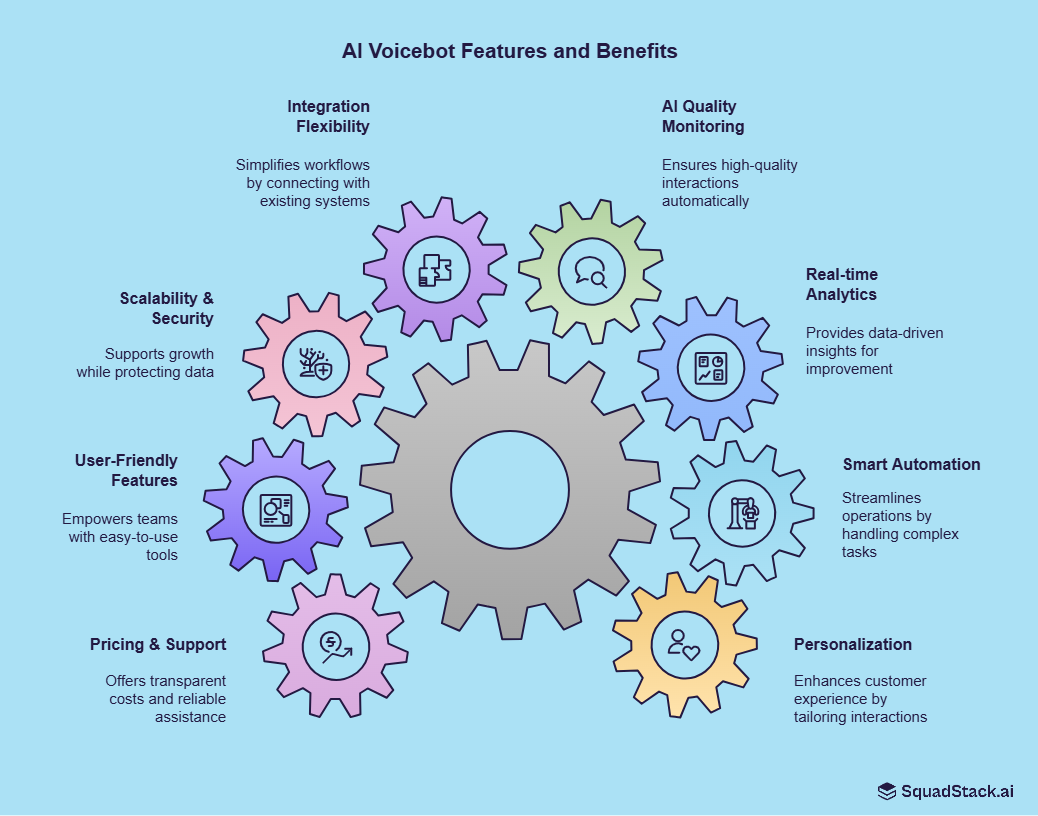
Advanced Features That Elevate AI Voicebot’s Performance
As businesses increasingly rely on automated conversations, the advanced features of an AI voicebot matter just as much as the basics. Many companies today have found that adding elements like personalization, real-time analytics, and smarter workflow automation can significantly improve both customer satisfaction and internal efficiency. Industry reports consistently show that customers respond better to systems that feel context-aware and don’t make them repeat information across steps or channels.
On the operations side, teams benefit from voicebots that handle complex tasks end-to-end rather than just answering simple queries. These enhanced capabilities help brands deliver faster, more accurate, and more human-like experiences- something that’s becoming a real competitive advantage.
Personalization & Context Awareness
Customers expect brands to “remember” them. A smart voicebot uses past interactions, preferences, or CRM data to personalize conversations- like knowing whether a customer previously raised a support ticket or recently applied for a service.
Smart Automation & Workflow Handling
The real magic happens when a voicebot does more than answer questions. Look for capabilities like updating customer details, verifying identity, checking order status, or scheduling appointments without human intervention.
Real-time Analytics & Reporting
Data-driven insights are essential for improving call flows and spotting areas where customers struggle. Good reporting tools help you measure call outcomes, drop-off points, sentiment, and performance trends.
AI-Driven Quality Monitoring
Typically, quality monitoring is a manual, time-consuming task. Modern voicebots equipped with AI automatically flag issues, analyze conversation quality, and track compliance- making operations faster and more accurate.
Integration Flexibility
Your voicebot should effortlessly plug into your CRM, lead management system, support tools, and internal databases. The smoother the integration, the fewer operational headaches for your tech team.
Scalability, Reliability & Security Features
As your call volume grows, the voicebot should scale without performance dips. Security features like encryption, compliance certifications, and safe data handling are equally important- especially for industries like BFSI or healthcare.
User-Friendly Features for Operations & Teams
It shouldn’t take an engineer to make basic updates. Look for voicebots with easy dashboards, no-code flow builders, and simple configuration options that help your operations team move fast.
Pricing & Support Features to Consider
Transparent pricing, robust onboarding, and responsive support teams can make or break your experience. A good vendor will guide you from implementation to optimization- not disappear after deployment.
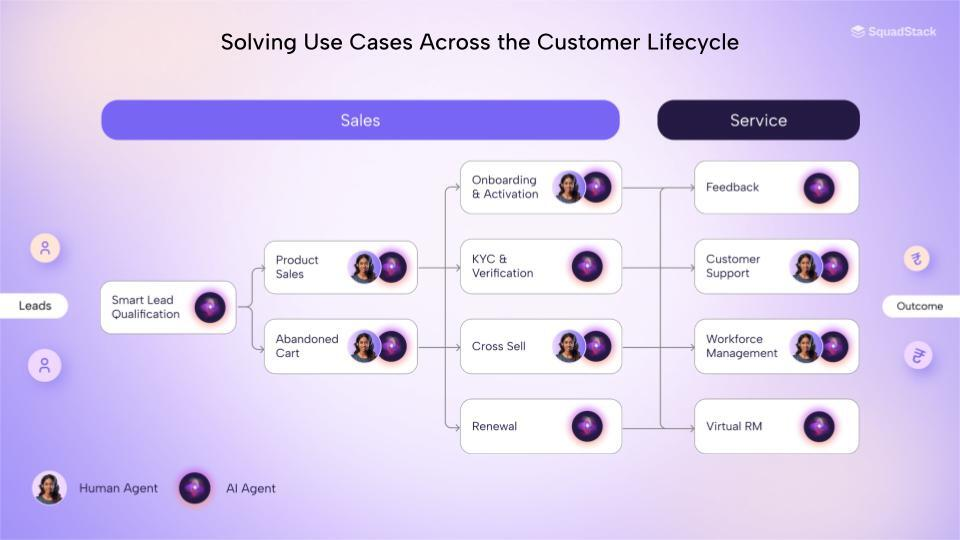
How SquadStack’s AI Voicebot Stands Out Against Competitors?
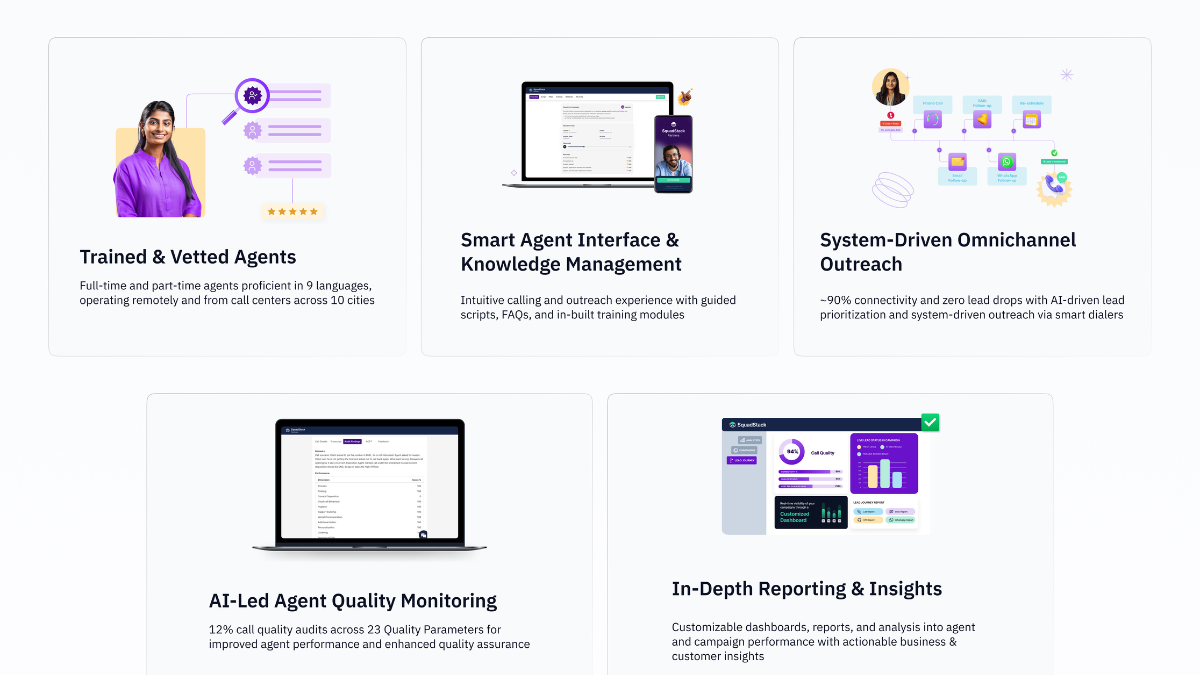
SquadStack’s voicebot is designed to blend human-like intelligence with operational efficiency. It focuses heavily on accuracy, personalization, workflow automation, and real-world reliability. Combined with deep integration capabilities, strong analytics, and human-in-the-loop support, it offers a smoother and more scalable solution for businesses that rely on high-quality conversations.
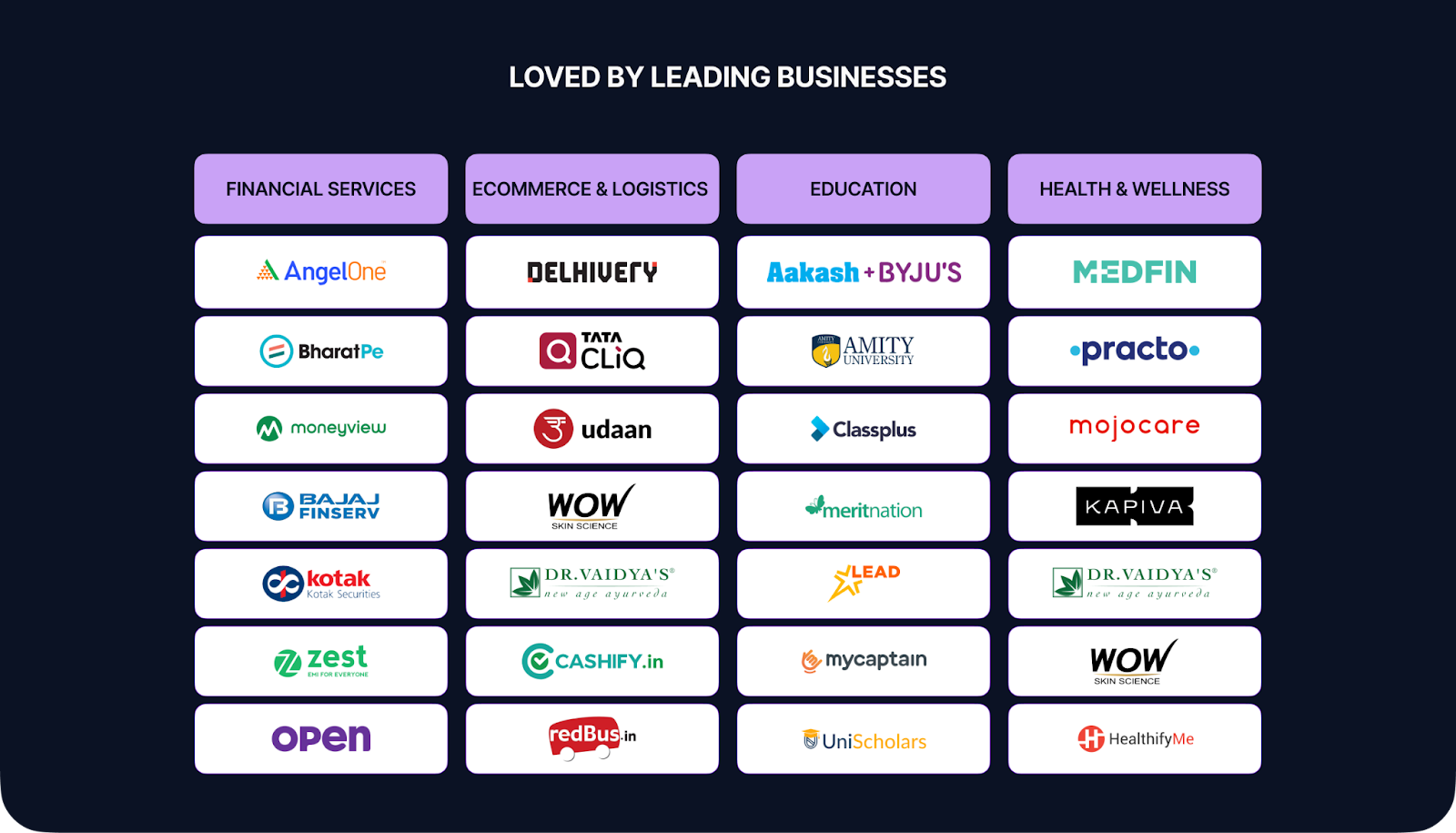
- Most AI voicebots claim to improve connectivity or reduce manual work, but SquadStack’s results show up where it matters- in day-to-day business metrics. Across different industries, the bot doesn’t just “sound human”; it actually performs like a reliable team member that works at scale.
- One of the biggest differences is consistent connectivity, even in tough use cases. Many companies using SquadStack report connectivity rates of 70–77%, which is significantly higher than what most internal teams achieve. In sectors like education, logistics, and field sales- where customers often don’t pick up- this single improvement changes the entire funnel.
- What also sets the bot apart is its ability to qualify more quickly and accurately. For example, hiring and onboarding workflows have seen qualification rates jump by 10–18%, while demo-driven businesses like Classplus were able to book 46,000+ demos at 87% connectivity with quick follow-ups. This level of accuracy and speed usually requires a large human team, but the AI agent handles it with structured logic and natural-sounding calls.
- Another area where SquadStack leads is cost efficiency during scale. In several cases, companies cut costs by nearly 50–70%, especially in hiring campaigns, surveys, and feedback ops. Competitors may automate parts of a workflow, but SquadStack’s bot is designed to manage the entire loop- identifying high-intent customers, following up, tagging outcomes, and syncing directly with CRMs. That end-to-end workflow eliminates a lot of manual effort and reduces the cost per outcome.
- Personalization is another big differentiator. Instead of reading from rigid scripts, the bot handles multilingual conversations, switches context mid-call, and responds in a more natural way. In surveys and feedback campaigns, this translated into 15%+ successful surveys and faster insight collection for large brands.
- Finally, what truly sets it apart is its reliability at enterprise scale. Whether it was 15 lakh+ leads contacted in a single week, or seller onboarding growing 5x, or service conversions rising by 30%, the platform supported all of it without compromising compliance or quality. For businesses that deal with fluctuating demand or seasonal spikes, this kind of stability is a rare advantage.
In simple terms, SquadStack’s voicebot doesn’t just automate calls- it consistently delivers business outcomes that most teams struggle to hit manually or with traditional dialers. It’s this combination of high connectivity, better qualification, natural conversations, and predictable costs that puts it ahead of most competitors in the space.
Final Thoughts
At the end of the day, choosing an AI voicebot isn’t about chasing the flashiest features- it’s about picking something that genuinely helps your customers and makes your team’s life easier. A good voicebot should feel effortless to talk to, handle real-world conversations without getting confused, and actually support the way your business works. When the basics are strong and the advanced features add real value, the entire experience becomes smoother for everyone involved. As customer expectations keep rising, having a voicebot that feels dependable, thoughtful, and truly conversational can make a noticeable difference in how people see your brand. In the long run, the right voicebot doesn’t just automate calls- it helps you build better relationships.


%20(1).webp)