.svg)

Outcome-Driven Voice AI Agents for Sales in India
Voice AI Agents that drive revenue by giving every lead the best pitch, on their preferred channel, in their language.



50 Lakh+

AI Calls Daily
90%
Lead Connectivity
40%
More Conversions
3x

50 Lakh+
90%
40%
3x

%201.webp)






































Lower Cost
Higher Conversions
Higher Feedback Collection
Lower Cost
Connectivity
Increase in Conversions


Connectivity
Qualification Rate
Connectivity
Conversions
Lower AHT
Higher Connectivity
Higher Conversions
Lower AHT
Connectivity
Lower CAC
Connectivity
Lower CAC


Lead Intelligence
Humanoid AI Agent
Omnichannel Engagement
Quality Monitoring
ROI
Optimizer
VoC
Insights
Control
Tower


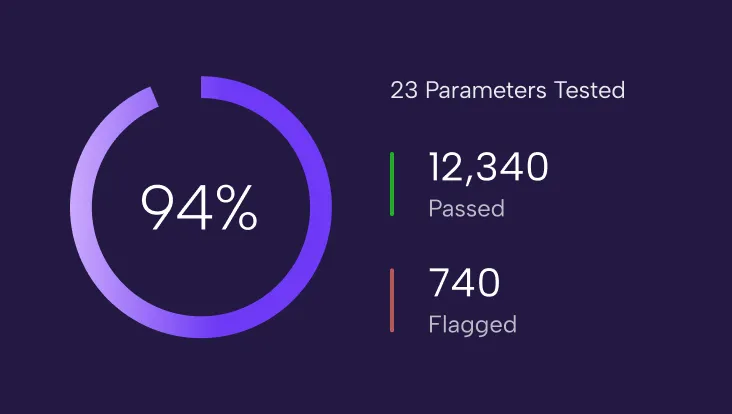
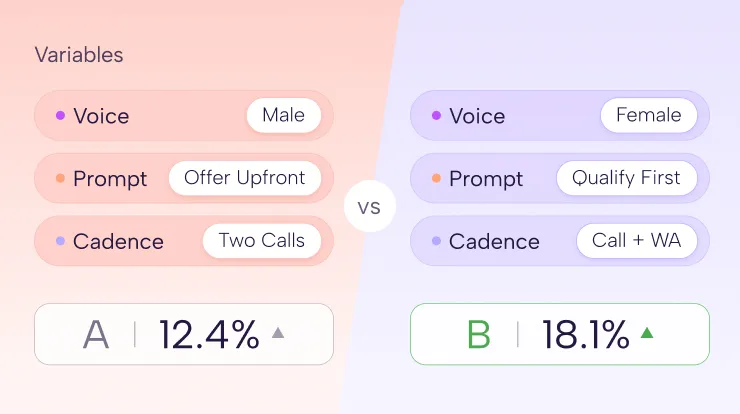

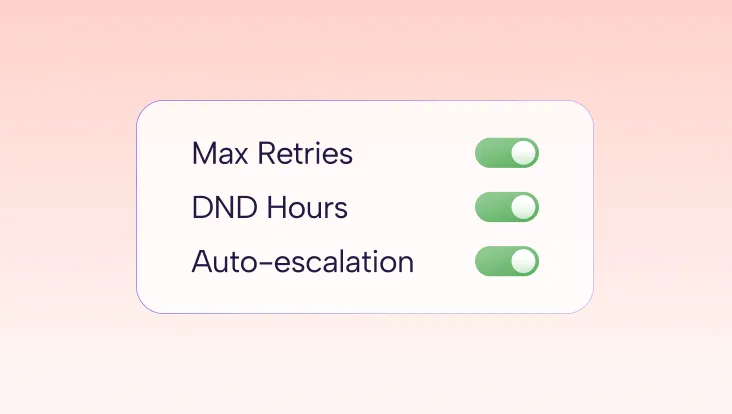
Capabilities
SquadStack.ai
Typical Voice AI Vendor
Focus
SquadStack.ai:
Increasing conversions and reducing CAC across your sales funnel
Typical Voice AI Vendor:
Broad platforms spread across many products and use cases
Scale
SquadStack.ai:
50 lakh+ calls daily for India's leading consumer brands
Typical Voice AI Vendor:
Low volume or pilot-stage deployments
Performance
SquadStack.ai:
90% connectivity, 40% more conversions, 3x lower CAC vs human agents
Typical Voice AI Vendor:
Results vary; few publish connectivity or conversion against human agents
POC Success Rate
SquadStack.ai:
93%
Typical Voice AI Vendor:
Rarely published
Speech Models
SquadStack.ai:
Proprietary, trained on 600M+ minutes of real Indian contact center conversations (Hinglish, Taminglish, etc.)
Typical Voice AI Vendor:
Mostly third-party or general-purpose models, not trained on Indian sales calls
Naturalness
SquadStack.ai:
Human-like voice AI agents that have passed the turing test
Typical Voice AI Vendor:
Quality varies; many struggle with code-mixing and background noise
Channels
SquadStack.ai:
Call + WhatsApp + SMS + In-App with cross-channel memory
Typical Voice AI Vendor:
Voice only
A/B testing
SquadStack.ai:
Controlled experiments on voice, prompt, channel sequence, and timing, built in
Typical Voice AI Vendor:
Not available
Memory
SquadStack.ai:
Persistent across sessions and channels, leads never repeat themselves
Typical Voice AI Vendor:
Every call starts cold
Long Conversations
SquadStack.ai:
No drift on even 30-turn complex sales calls
Typical Voice AI Vendor:
Loops, contradicts, or breaks after 10+ turns
Compliance
SquadStack.ai:
ISO 27001, ISO 27701, SOC 2 Type II, DPDP, TRAI-compliant
Typical Voice AI Vendor:
Varies by vendor; check certifications
Team
SquadStack.ai:
Agile team of product managers, forward-deployed engineers, and data scientists focused on improving your business metrics
Typical Voice AI Vendor:
Account managers with limited technical depth
Best fit
SquadStack.ai:
Consumer brands running high-volume sales calls in India, measured on conversion and CAC
Typical Voice AI Vendor:
Teams that want a self-serve tool to build their own agents, or mostly inbound support
.svg)
.svg)
.svg)
.svg)
.svg)


Salesforce

Zoho

Hubspot

Meritto

WebEngage

MoEngage

Clevertap

Netcore

Exotel

Knowlarity

Ozonetel

Gupshup

BigQuery

Redshift

AWS S3
Add Your Own
A Voice AI Agent holds a real two-way phone conversation. It listens, works out intent while the person is still speaking, replies in natural speech, and completes an outcome: qualifying a lead, opening an account, booking an appointment, taking a payment commitment, resolving a query. IVR makes callers press keys through a menu. Chatbots need typing. A Voice AI Agent adapts the flow mid-call, switches language mid-sentence, handles interruptions and background noise, and hands off to a human when the conversation needs one. SquadStack.ai campaigns run up to 90% lead connectivity against under 30% on IVR menus.
Voice AI in India is priced per minute of conversation, typically between ₹2 and ₹5 a minute depending on language mix, call complexity and how deep the CRM and telephony integration goes. Enterprise deployments carry a one-time setup cost for integration and agent build, and the per-minute rate falls as volume rises. SquadStack.ai includes the dialer and telephony layer in the price where most vendors bill them separately. The number that decides the business case is cost per outcome, not cost per minute. SquadStack.ai prices against outcomes, and leading brands are seeing a 2 to 3x lower customer acquisition cost than an equivalent human telecalling team.
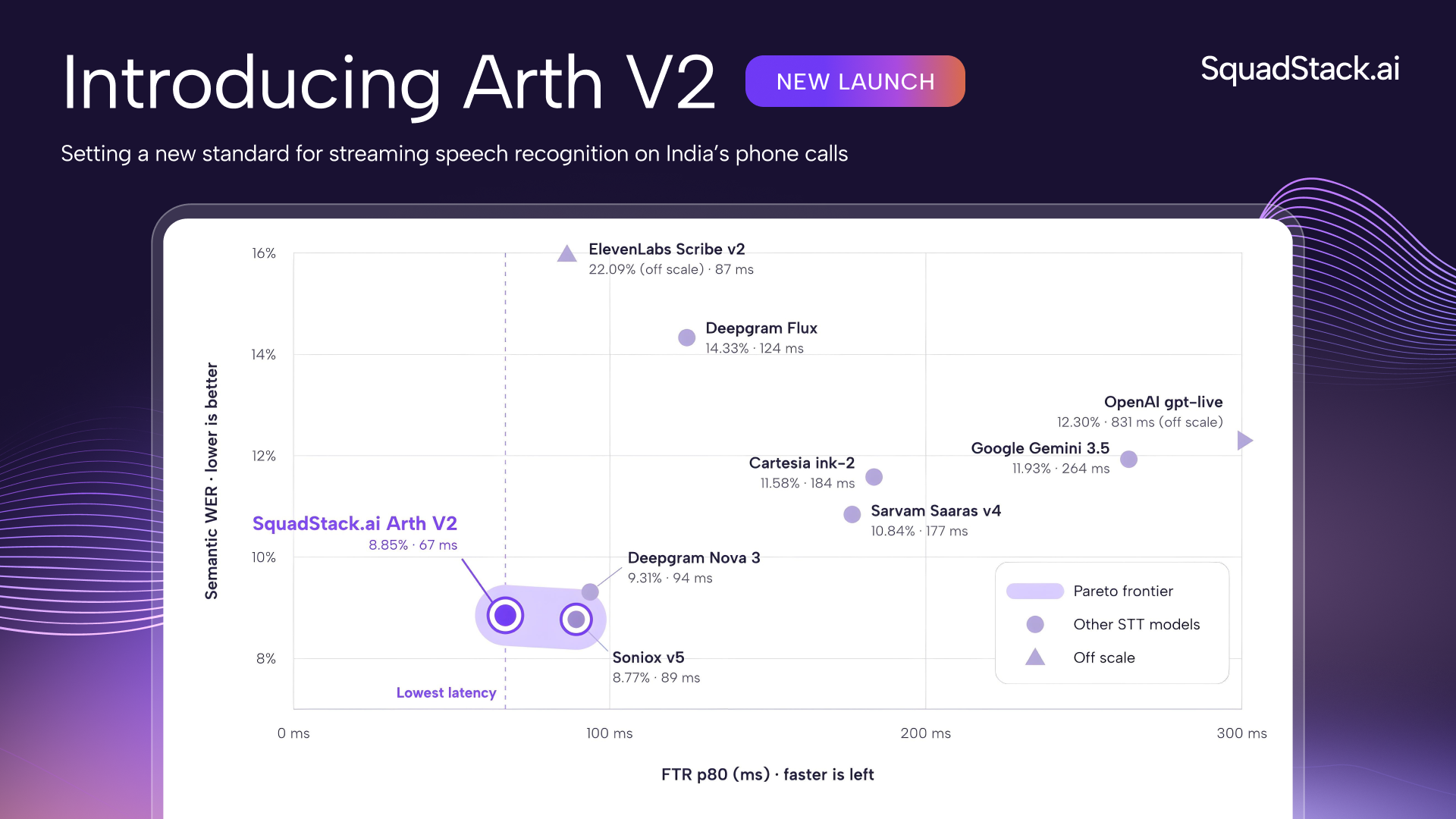
Six years of running AI-native sales contact centres for India's largest consumer brands, and a platform built out of what that taught. The product is designed around the number a sales leader is measured on rather than around the agent. That operating history shows up in three places. The speech stack is owned: Arth, the in-house speech recognition model, is trained on 600 million+ minutes of real Indian telephony audio, noisy, code-switched, captured on live 8kHz lines, and the reasoning layer is an in-house Sales LLM adapted on 400 million+ real sales interactions and their outcomes. Most vendors run third-party models trained on public datasets, because production-quality 8kHz Indian telephony data does not exist publicly to train on. Around the agent sits the rest of the sales system: lead prioritisation, dialer and telephony included rather than billed separately, dual-layer AI and human QA, and an A/B testing engine that tunes voice, script, channel and timing per lead. And all of this shows up in outcomes: 50 lakh+ calls a day for 60+ brands, a 93% proof-of-concept success rate against roughly 25% for the category, and 2 to 3x lower customer acquisition cost than human teams.
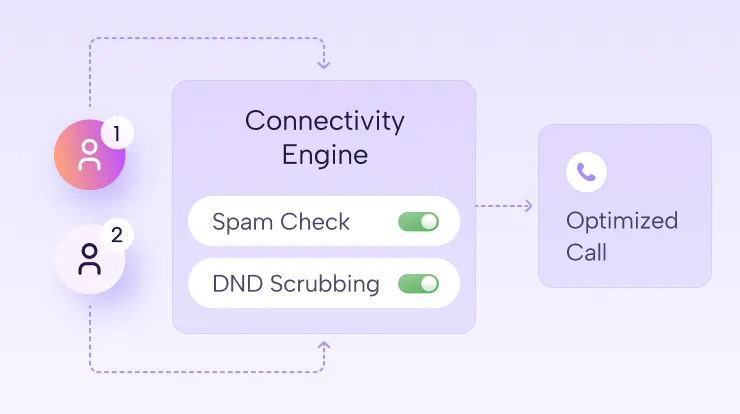
Yes, under the same rules that govern human telecalling. Outbound AI calls sit inside TRAI's commercial communication framework: lead lists have to be scrubbed against the DND registry before dialing, promotional calling runs through registered DLT headers and pre-approved templates, and calling hours are restricted. The DPDP Act adds consent, purpose limitation and data residency, and BFSI collections calls also sit under RBI's recovery agent guidelines on contact timing and conduct. Enterprises get into trouble on execution rather than on the technology. SquadStack.ai scrubs against the TRAI DND registry and against client-uploaded internal DND lists, hard-enforces a 9:30 AM to 8:30 PM calling window at the platform level rather than by policy, and runs consent gating, opt-out honouring and configurable AI disclosure inside the conversation layer itself.
Yes, two-way, and the dialer and telephony layer ship included. CRM integrations cover Salesforce, Zoho, HubSpot and Meritto. Customer data platforms cover WebEngage, MoEngage, CleverTap and Netcore. Telephony covers Exotel, Knowlarity, Ozonetel and Gupshup, with multi-operator routing, redundancy and failover. Data flows out to BigQuery, Redshift and AWS S3, and anything not on the list connects through lead and workflow APIs, webhooks and custom connectors built by the forward deployed engineer assigned to the account. Most vendors charge for the dialer and telephony separately; here they are part of the platform, which is worth checking line by line when you compare per-minute quotes.
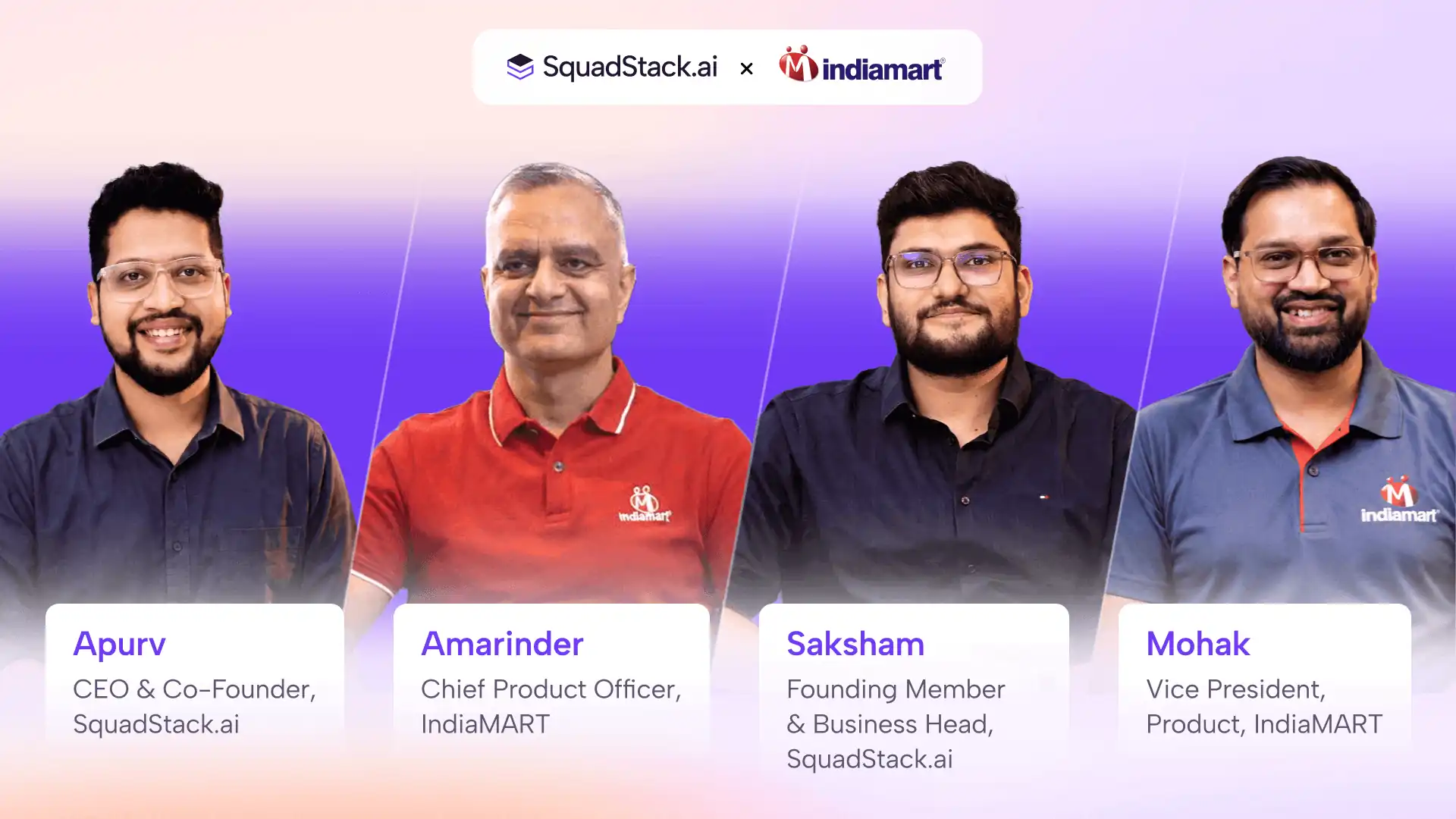
Across every campaign SquadStack.ai runs, the AI meets or beats the brand's own human agent benchmark. IndiaMART deployed what is now India's largest agentic AI system in live commerce, at 70% higher connectivity and 20% higher conversion on outbound lead qualification. redBus scaled multilingual feedback collection at roughly 70% lower cost, beating its human baseline in every language tested. Shiprocket handled 3 lakh+ leads and drove 5x seller ID verification. Delhivery cut rider acquisition cost by 4x and onboarded riders 3x faster. A leading bank-linked brokerage reached 3x conversions at 3.2x lower average handle time. Eureka Forbes lifted sales conversions 30%. STAGE deflected 55% of support calls at 86% CSAT. Behind the numbers is the structural point: scaling a human team means hiring, training, attrition and two to three months of performance drag, while scaling AI is instant and consistent. Complex conversations still warm-transfer to a human, by design.
SquadStack.ai runs Voice AI sales, onboarding, collections and support campaigns for 60+ leading consumer brands across India. In BFSI that includes Kotak Mahindra Bank, Kotak Securities, Bajaj Broking, AngelOne, TATA AIG, IIFL Finance, DMI Finance, BankBazaar, KreditBee, TATA Digital, Khatabook, Moneyview and PhonePe. Outside BFSI it includes IndiaMART, Flipkart, Amazon, Swiggy, Justdial, redBus, Delhivery, Shiprocket, Adda247, Collegedunia, Medibuddy, TVS Motors, Eureka Forbes, Parul University, Unacademy, Classplus, NxtWave and Naukri. Typical use-cases: personal loan sales, demat account opening, credit card sales and activation, EMI collections, seller onboarding, rider hiring, lead qualification and appointment booking.
Nine: Hindi, English, Tamil, Telugu, Kannada, Marathi, Malayalam, Gujarati and Bengali. The agent switches language mid-sentence, not just mid-conversation, so Hinglish and Taminglish are native to the models rather than a translation step bolted on afterwards. Listing a language is not the same as sounding native in it, which is why regional-language campaigns across the industry see higher drop-off: most text-to-speech is trained on read-speech, and written Tamil and spoken Tamil work like different languages. SquadStack.ai's 1,000+ voices are cloned from real top-performing Indian sales agents and every speech artifact is tested per voice on actual 8kHz phone lines.
SquadStack.ai was the first voice AI platform to pass the Turing Test for contact centres. At Global Fintech Fest in October 2025, 1,273 of 1,563 attendees identified its AI agents as human in blind listening tests where they heard four recordings, two AI and two human, and had to pick the humans. The operational number matters more than the event: Abruptly Disconnected Rate is the share of calls dropped within ten seconds of a caller realising they are speaking to an AI. First-generation IVR runs above 70%. Human agent campaigns run 8 to 12%. SquadStack.ai runs at roughly 10%, down from around 40% in January 2025.
SquadStack.ai is ISO/IEC 27001:2022 and ISO 27701 certified, SOC 2 Type II compliant, and DPDP and TRAI compliant. All models run in India, with on-premise and private cloud deployment available where sensitive workflows cannot leave the enterprise boundary. Consent capture, recording retention and PII redaction and masking are built into the pipeline rather than bolted on. One detail regulated buyers usually ask about specifically: the self-improvement layer that continuously tunes agent scripts is structurally blocked from touching compliance language, product rules, pricing guardrails and agent identity, which sit in locked sections. Optimisation cannot drift into a compliance breach.
Roughly two weeks of setup, then a four to eight week live pilot, then scale once the metric is proven. Setup runs five steps: kickoff, solutioning, agent and workflow build, integrations, testing. Solutioning is where the use case, scope and pilot success metric get fixed before any build starts. The two weeks are not model work; the agent trains on your real call recordings, knowledge base and FAQs first, and the long pole is usually dependencies like data feeds, telephony approvals and compliance sign-off.
The model is roughly 10% of the problem, and in-house builds usually discover the other 90% in month six. What sits around the model: a decision system that picks script, voice, cadence, channel and timing per lead; a speech stack fine-tuned on your own outcome data rather than public audio; a telephony and dialer layer; QA infrastructure for thousands of concurrent calls; and a continuous optimisation loop feeding all of it. Indian-language speech models and sub-800ms latency at scale each need a team most consumer brands do not have, which pulls engineers off revenue work. The 90% is not a one-time build either. New models ship every few weeks, and each one is a fresh migration: re-benchmark, re-tune prompts, re-test latency, re-verify compliance behaviour, and work out whether it actually converts better or merely scores better on a public leaderboard. Doing that honestly needs an evaluation set built from your own sales outcomes, which is exactly what an in-house build has least of on day one, and it is the same reason a public model cannot be tuned to your conversions the way an owned stack can. SquadStack.ai's layer is model-agnostic and runs that evaluation continuously, routing per conversation and even per turn to whichever model performs, with its in-house Sales LLM carrying the majority of production traffic. Model choice stays a running optimisation rather than a decision your team has to get right once and then live with. By the time an in-house build reaches production quality, an outcome has usually already been delivered elsewhere.












.png)