.svg)

Voice agents powered by AI technology have progressed from a development or proof-of-concept to an integral part of business communications. From making outgoing sales calls and sending payment reminders to handling customer service and scheduling appointments, voice agents are now engaged in millions of conversations every day. With the growing adoption of voice agents, the number of vendors and solutions in the market is also increasing, making it more challenging for businesses to determine which voice agent will ultimately deliver tangible value. This is why understanding how to evaluate a voice agent is no longer a choice but a crucial step with a direct impact on customer experience, efficiency, and revenue generation.

Assessing a voice agent, however, is about more than listening to a demo call or comparing features. A voice agent that may sound very attractive in a lab setting may not perform well when exposed to real customers, different accents, noisy call conditions, or high call volumes. Businesses require a systematic approach to assessment that emphasizes conversational intelligence, accuracy, scalability, compliance, and business impact.
Why Evaluating a Voice Agent Matters in 2026
In 2026, it has become imperative for businesses to know how to evaluate a voice agent, particularly as the role of voice automation in sales, customer service, and collections grows. Voice agents are no longer restricted to simple conversations or basic IVR paths—they now have to deal with actual conversations with actual customers. And customers will immediately know if the voice agent sounds awkward, doesn’t understand the context, or doesn’t respond properly.
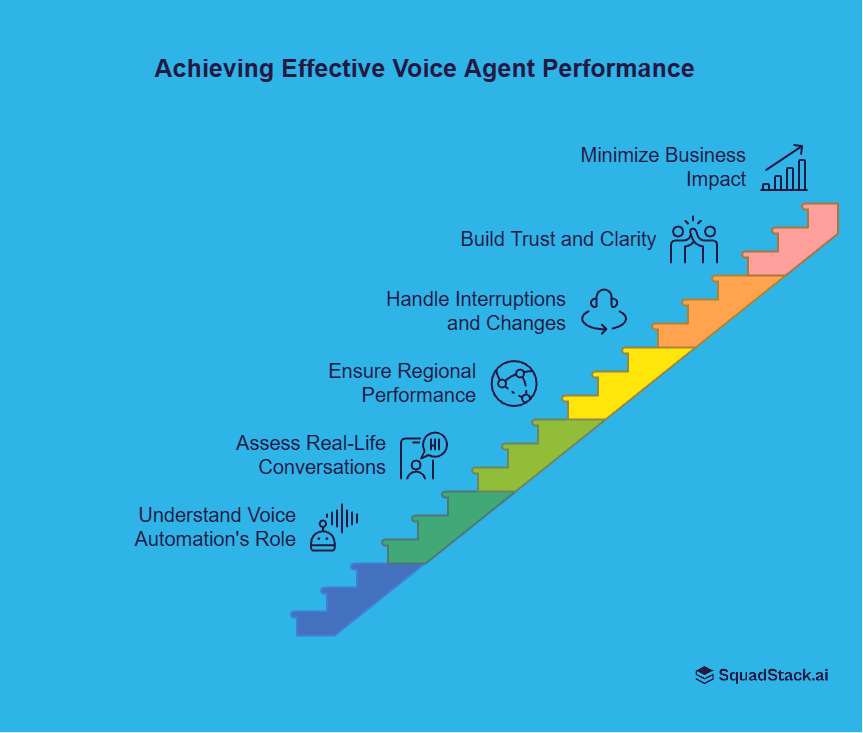
As businesses expand their call activities, voice agents are expected to perform well across different regions, accents, and call situations. Customers may interrupt, ask follow-up questions, or change the subject mid-call, and a voice agent that hasn’t been properly assessed will likely fail in these situations. This is why it is important to learn how to properly assess a voice agent, going beyond features to consider how the system will perform in real-life, unpredictable conversations where trust and clarity are most important.
There is also a compelling business reason to take voice agent assessment seriously. When used at scale, even small inaccuracies or issues with conversation quality can result in thousands of lost calls, lower conversion rates, and compliance problems.
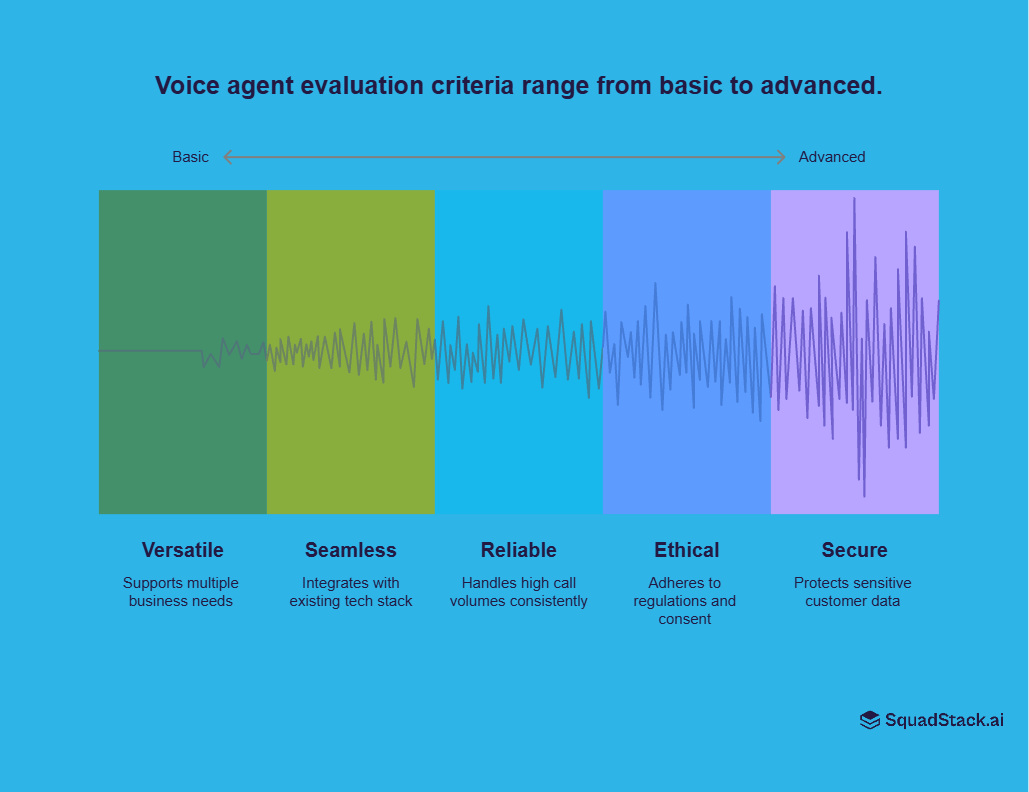
Key Criteria to Evaluate a Voice Agent
When companies begin to investigate the process of testing a voice agent, among the first things they should avoid is simply considering the surface-level aspects of a voice agent or a demo call. The truth is, the success of a voice agent depends not only on its performance in conversations but also on its ability to handle unexpected customer behavior and high call volumes. The proper testing framework should examine both the quality of the conversation and the decision-making capability of a voice agent, since a voice agent is not only speaking but also directing a conversation towards a business goal.
The following criteria can help companies go beyond marketing speak and determine whether a voice agent can have a conversation, interpret intent correctly, and do so in a way that feels natural and reliable.
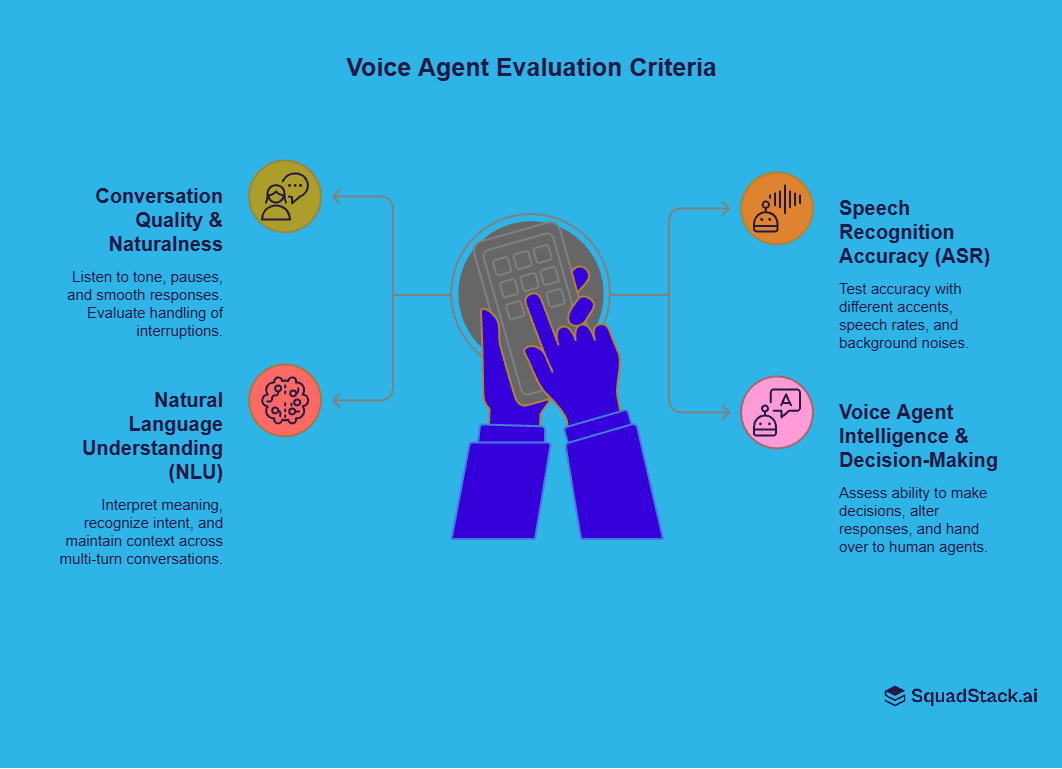
1. Conversation Quality & Naturalness
Conversation quality is often the first thing customers notice—and the first reason they disconnect if something feels off. When evaluating a voice agent, listen closely to how it speaks. Does the tone sound calm and natural, or robotic and rushed? Are pauses timed correctly, and does the agent respond smoothly without awkward delays?
Natural conversations also depend on how well the voice agent handles interruptions. In real calls, customers rarely wait for the agent to finish speaking. A strong voice agent should pause, acknowledge the interruption, and respond appropriately rather than restarting or breaking the flow. Evaluating conversation quality helps ensure the voice agent keeps customers engaged rather than pushing them away.
2. Speech Recognition Accuracy (ASR)
The accuracy of speech recognition is an important factor in determining the success of a voice agent. It is necessary to learn how to assess a voice agent by testing its speech recognition accuracy across different accents, speech rates, and background noise.
A voice agent can perform well in a noise-free demo setting but may fail when deployed to a variety of customers. Misunderstood responses can result in incorrect actions, repeated questions, or failed conversations. It is necessary to test the accuracy of speech recognition in real calls to ensure that the voice agent understands what the customer is trying to say.
3. Natural Language Understanding (NLU)
While speech recognition focuses on hearing words correctly, natural language understanding is about interpreting meaning. A high-quality voice agent should recognize customer intent even when responses are indirect, incomplete, or phrased differently from what was expected.
When evaluating NLU, test how well the voice agent maintains context across multi-turn conversations. For example, can it remember what the customer said earlier in the call? Can it handle follow-up questions without losing track of the conversation? Strong NLU ensures the voice agent feels intelligent and responsive rather than rigid or scripted.
4. Voice Agent Intelligence & Decision-Making
The intelligence of a voice agent can be measured by its ability to make decisions during a live conversation. A voice agent that relies on rigid scripts is outdated. A voice agent should be able to adjust its responses based on customer behavior and responses.
When assessing this feature, it is important to note how the voice agent responds to objections, doubts, and unexpected responses. Is the voice agent able to alter its strategy depending on the customer’s hesitation or need for more information? Is the voice agent able to hand over the conversation to a human agent at the appropriate time?
Evaluating Voice Agent Performance for Business Use Cases
Understanding how to evaluate a voice agent becomes much easier when you consider its performance in real-world business applications. A voice agent may seem impressive on its own, but its utility is realized only when it is used for a specific purpose, such as sales, customer service, or collections.
To evaluate a voice agent, it is essential to consider its performance in real-world applications aligned with the business’s primary use cases. The following sections will help you understand what to look for in a voice agent with the help of real-world examples.
Use Case Coverage
A good voice agent should be versatile enough to support various business use cases without requiring much rework. When evaluating use case coverage, assess whether the voice agent can be adapted to suit your needs rather than requiring you to adapt your business to the technology.
- For instance, in sales, a voice agent should be able to qualify a lead, follow up on questions, and address common objections such as “call me later” or “send me the details on WhatsApp.”
- In customer service, the voice agent should be able to shift gears and respond to user identity, FAQs, and complex queries that require human customer service representatives.
- In collections/payment reminders, the voice agent should communicate effectively, maintain a respectful tone, and follow compliance guidelines while prompting a response.
A voice agent that performs well in only one use case may not be scalable in the long run. Evaluating voice agents across various use cases will help businesses select a voice agent that grows with them.
Integration & Tech Compatibility
Even the smartest voice agent can go wrong if it is not integrated with other tools. One of the most underrated factors in judging a voice agent is its ability to integrate seamlessly with your current tech stack.
- In practical applications, voice agents may require access to the CRM database, payment gateways, ticketing systems, or lead management software.
- For instance, a sales voice agent should be able to retrieve lead information from a CRM database, update call results in real time, and automatically initiate follow-up activities.
- A support voice agent may need to generate tickets or retrieve order information during a call without disconnecting the customer.
Evaluating integration abilities upfront will ensure that your voice agent integrates smoothly with your workflows.
Scalability & Reliability
Voice agents are typically deployed to handle high call volumes, especially during peak business hours or large outbound campaigns. When evaluating a voice agent, it’s important to test how reliably it performs at scale—not just during low-volume trials.
- For example, a collection's voice agent might need to place thousands of calls within a limited time window. If the system struggles with concurrency, call drops, or inconsistent response times, the entire campaign can suffer.
- Similarly, during a product launch or seasonal spike, a support voice agent must handle a surge in inbound calls without degrading customer experience.
Evaluating scalability and reliability helps ensure the voice agent can maintain consistent performance, accuracy, and call quality even under heavy load.
Regulatory Compliance
Compliance is an important consideration when evaluating a voice agent's performance, especially in sectors such as finance, healthcare, and telecom. A voice agent must comply with regional calling rules, consent, and opt-out procedures without exception.
- For example, in an outbound calling scenario, the voice agent must comply with DND lists, obtain record consents as necessary, and refrain from calling during restricted hours.
- In regulated sectors, it may be necessary to employ approved scripts or disclosures at certain points in the dialogue. Failure to comply with regulations can lead to legal consequences and a loss of customer confidence.
Knowledge of how to evaluate a voice agent's compliance readiness is essential for mitigating risks while adhering to ethical and legal communication standards.
Data Security & Privacy
Sensitive customer information such as phone numbers, payment information, and call recordings is handled by voice agents. Evaluating data security and privacy practices is critical before implementing any voice automation solution.
- In real-world use cases, businesses must be assured that call information is encrypted and secure, with access limited to authorized personnel only.
- For example, a collection's voice agent handling financial information must adhere to strict data protection standards to prevent leaks or misuse.
- Similarly, customer support calls may involve personal or account-specific information that must be kept confidential.
A voice agent that has been properly evaluated is data-secure by design, ensuring that organizations' customer trust is protected throughout the call process.
Metrics to Track When Evaluating a Voice Agent
Knowing how to evaluate a voice agent doesn’t stop at listening to call recordings or reviewing scripts. The most reliable way to understand performance is through data. Metrics reveal how a voice agent behaves at scale, how customers respond to it, and whether it’s actually delivering business value.
Different industries prioritize different outcomes, but the core idea remains the same: track metrics that reflect both conversation quality and real-world impact. The sections below outline the key metrics businesses should monitor when evaluating a voice agent.
Call Performance Metrics
Call performance metrics show how well a voice agent executes conversations from start to finish. These are often the first indicators of whether the system is working as expected.
- Key metrics include call connection rate, call completion rate, average handling time (AHT), and drop-off points within conversations.
- For example, in outbound sales, a low call completion rate may indicate that prospects are disconnecting early due to poor conversation flow or unclear messaging.
- In customer support, unusually long handling times may signal that the voice agent struggles to resolve queries efficiently.
By analyzing call performance metrics, businesses can identify where conversations break down and determine whether the voice agent is keeping customers engaged long enough to achieve its intended goal.
Business Outcome Metrics
While call metrics show activity, business outcome metrics show results. When evaluating a voice agent, it’s critical to track whether conversations are actually leading to desired outcomes.
- In sales-focused use cases, relevant metrics include lead qualification rate, appointment booking rate, and conversion rate.
- For example, a voice agent used by a real estate company might be evaluated on how many qualified site visits it schedules per 1,000 calls.
- In collections, success may be measured by payment promise rates or recovery amounts. For customer support, first-call resolution and a reduction in human-agent workload are often key indicators.
These outcome-driven metrics help businesses determine whether the voice agent contributes to revenue growth, cost savings, or operational efficiency—making them central to evaluating a voice agent effectively.
Analytics & Reporting Capabilities
Even the best metrics are only useful if businesses can access and act on them easily. Strong analytics and reporting capabilities play a major role in evaluating voice agents. A well-designed voice agent platform should provide clear dashboards, call transcripts, intent-level insights, and trend analysis.
- For example, an e-commerce business may want to identify which delivery-related queries appear most often, while a fintech company may analyze where customers hesitate during payment reminder calls.
- These insights allow teams to refine scripts, improve intent recognition, and optimize performance over time.
- Evaluating analytics capabilities ensures that businesses aren’t just deploying a voice agent, but continuously improving it based on real data.
- This ongoing visibility is essential for long-term success and is key to understanding how to evaluate a voice agent beyond the initial rollout.

Evaluating the Voice Agent Provider
Being able to evaluate a voice agent is more than just understanding the technology—it’s also about the company that stands behind it. Two voice agents with similar functionality can yield vastly different outcomes depending on how well the company assists with their implementation, customization, and optimization. For most companies, the vendor will become a long-term partner rather than a one-time supplier.
When evaluating a voice agent vendor, companies need to look beyond the list of features and ask questions such as: How easy is it to get started? How difficult is the customization process? And what kind of support is available once the voice agent is up and running, communicating with customers daily?
Ease of Deployment & Customization
One of the fastest ways to spot a strong voice agent provider is by looking at how quickly and smoothly you can go live. A good provider understands that businesses don’t want long setup cycles or heavy engineering dependencies just to launch a basic use case.
- When evaluating deployment, consider how much configuration can be done without technical expertise. For example, can business teams alter scripts, change call flows, or introduce new intents without relying on development cycles?
- In sales or collection scenarios, the ability to quickly adjust messaging based on campaign results or regulatory changes can be very beneficial.
- Customization is also a critical aspect. A voice agent should be able to represent your brand voice, business logic, and customer expectations.
- Vendors who provide flexible workflows, industry templates, and support for multiple languages make it easier to customize the voice agent to suit actual business needs.
Support, Training & Optimization
Voice agents are not “set and forget” systems. Customer behavior shifts, new objections emerge, and new business priorities arise. This is why continuous support and optimization are essential to evaluating a voice agent provider.
- The best voice agent vendors provide hands-on support, comprehensive documentation, and access to experts who understand both technology and business applications.
- For example, if the conversion rate for a voice agent in a sales process declines, the vendor should be able to assist in examining call data, pinpointing areas of friction, and providing recommendations for improvement—not simply referring to analytics.
- Support for training and optimization is also important in the long run. Voice agent vendors who work to improve conversation flows, enhance intent detection, and adapt to new situations ensure that the voice agent remains effective as call volume increases. This type of support is what can differentiate voice agents that provide consistent ROI from those that falter after the initial implementation.

How SquadStack Voicebots Meet These Evaluation Criteria
When businesses evaluate voice agents in real-world conditions, the difference between “capable” and “reliable” solutions becomes obvious. SquadStack Voicebots are designed specifically for high-stakes, high-volume business conversations, where outcomes like connectivity, conversions, and compliance matter more than surface-level features.
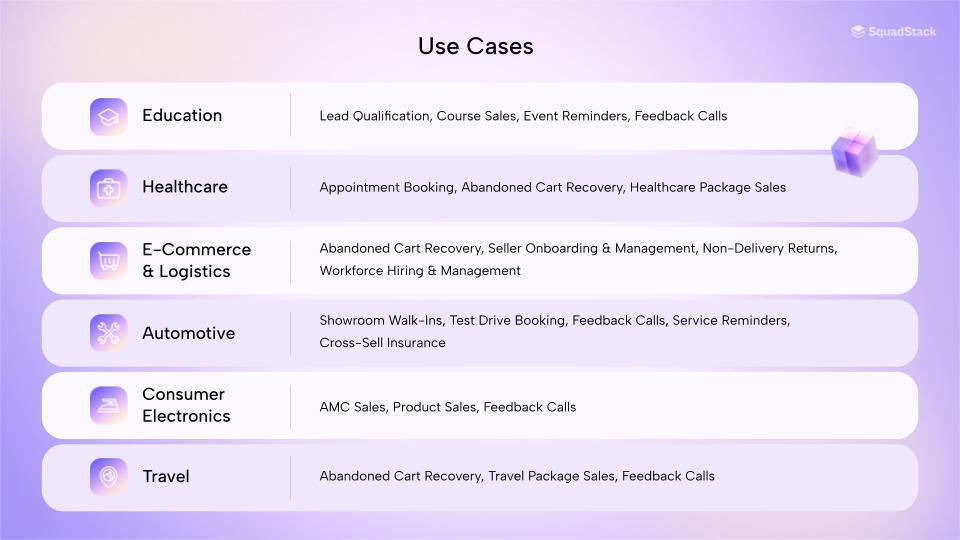
Across industries like BFSI, education, logistics, e-commerce, and healthcare, SquadStack voicebots are already operating at scale—handling hundreds of thousands of conversations daily and delivering measurable business impact.

Built for Natural, Human-Like Conversations at Scale
One of the first things businesses assess when evaluating a voice agent is how human the conversation feels in real time. SquadStack Voicebots are trained on hundreds of millions of real customer conversations, which shows up clearly in live calls.
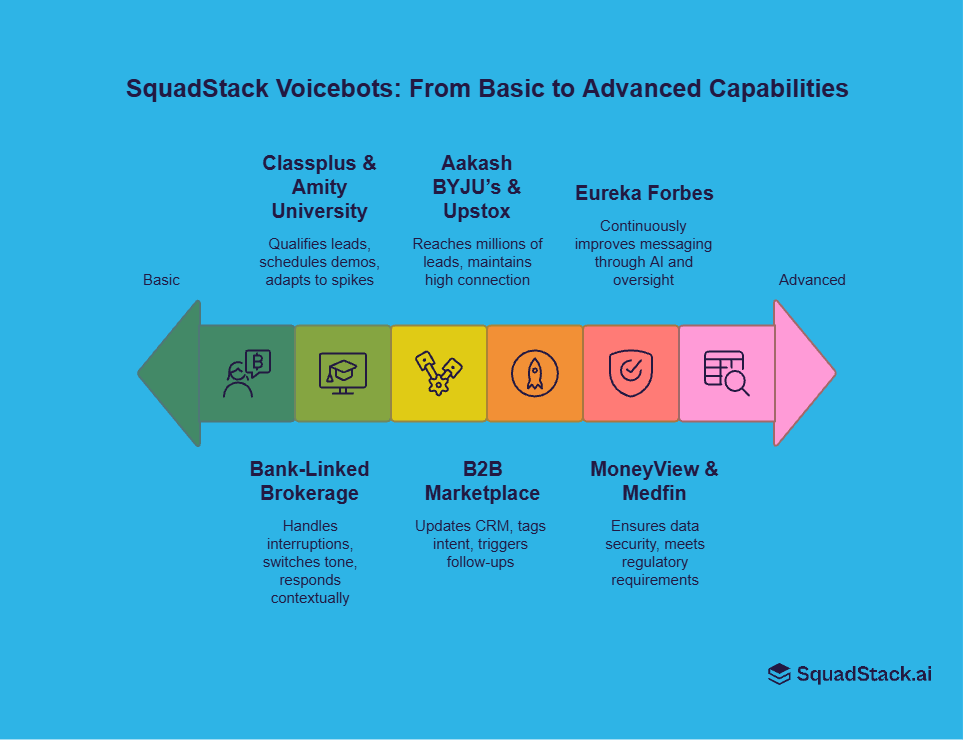
For example, a bank-linked brokerage platform using SquadStack Voice AI kept customers engaged longer because the voicebot handled interruptions, switched tone mid-call, and responded contextually rather than repeating scripted prompts. This resulted in 3× the conversions and significantly shorter handling time than human-only calling.
These aren’t controlled lab conditions—these are real prospects, calling back at different times of day, across regions and accents. The ability to sound natural under these conditions is a key reason enterprises trust SquadStack when evaluating voice agents for production use.
Strong Performance Across Diverse Business Use Cases
SquadStack Voicebots are not built for a single narrow workflow. They adapt throughout the customer lifecycle, which is a critical factor in the growth of businesses.
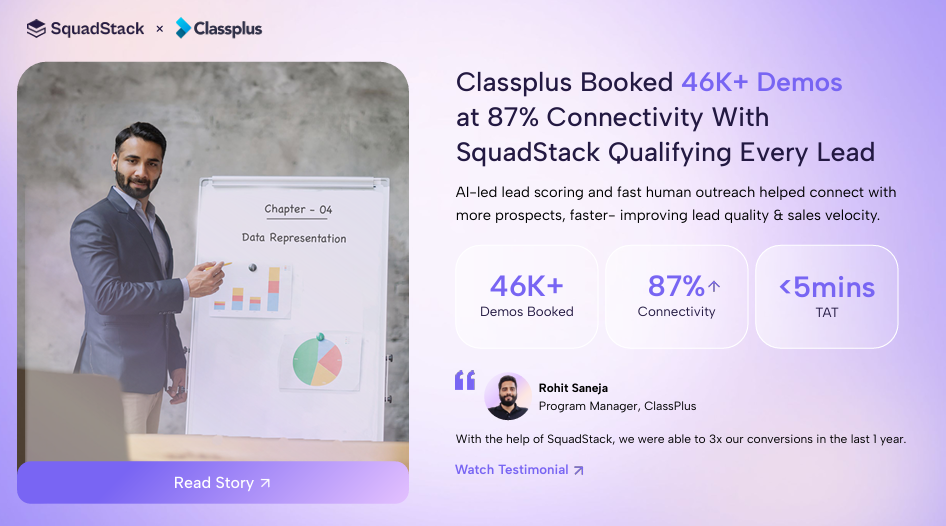
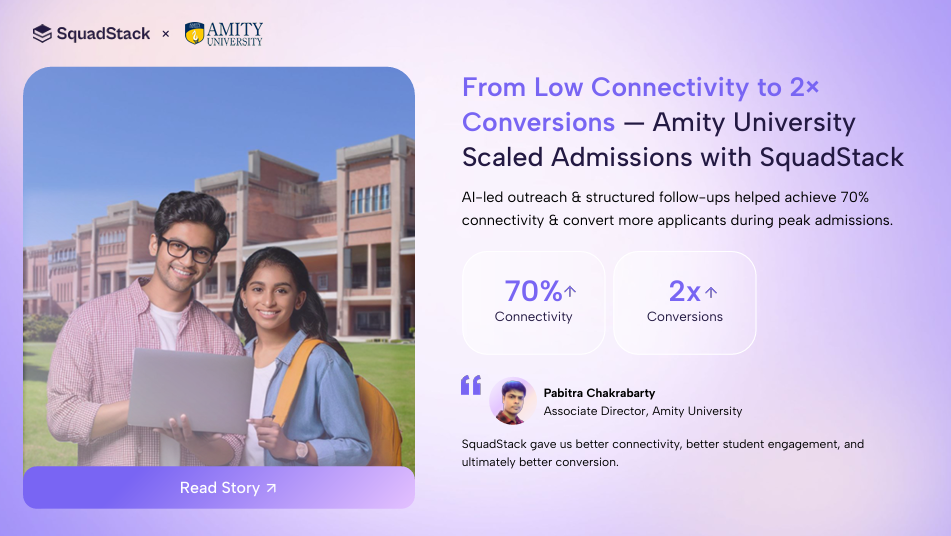
In education, platforms like Classplus and Amity University used SquadStack voicebots to qualify leads and schedule demos during peak admission seasons. The result was 87%+ connectivity and up to 2× higher conversions, even when lead volumes spiked suddenly.
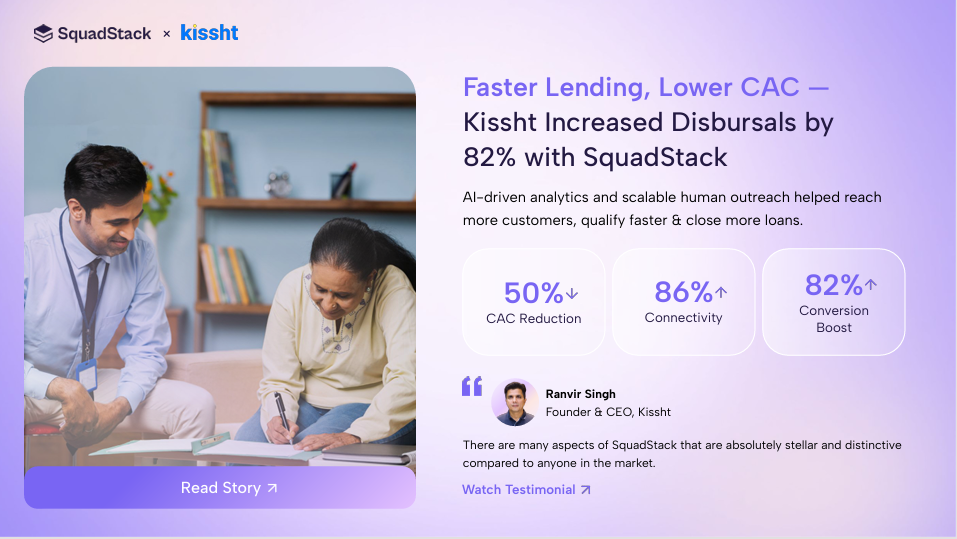
In lending, companies like Kissht and MoneyView deployed SquadStack voicebots for loan outreach and follow-ups. By combining personalized messaging with intelligent retry logic, they achieved 80%+ connectivity and significant improvements in loan disbursal rates—while maintaining a compliant and respectful customer experience.
These examples show that evaluating a voice agent’s use-case coverage is about flexibility, not just functionality.
Deep Integration With Business Systems and Workflows
A voice agent’s real value often depends on how well it fits into existing systems. SquadStack Voicebots are deeply integrated with CRMs, lead management systems, and internal workflows—keeping the conversations non-isolated.
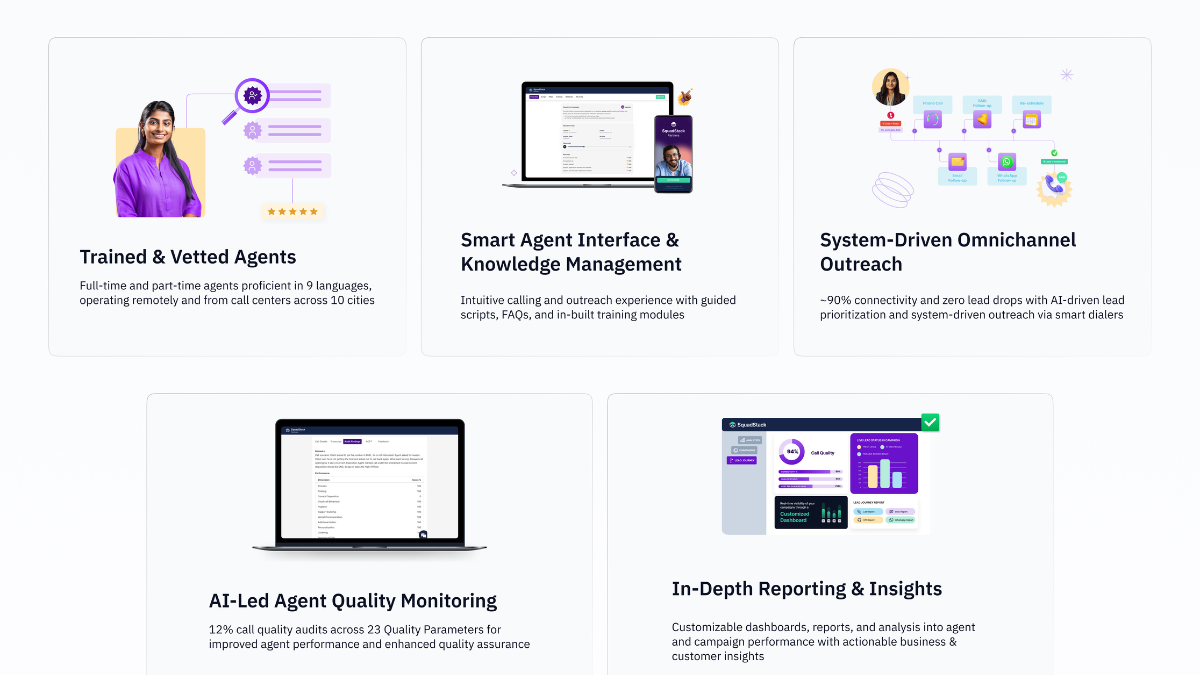
For instance, a B2B marketplace using SquadStack integrated voicebots directly into its CRM to auto-update lead outcomes, tag intent, and trigger follow-ups in real time. This eliminated manual work for sales teams, leading to 50% higher conversions and a 45% lower cost per qualified lead.
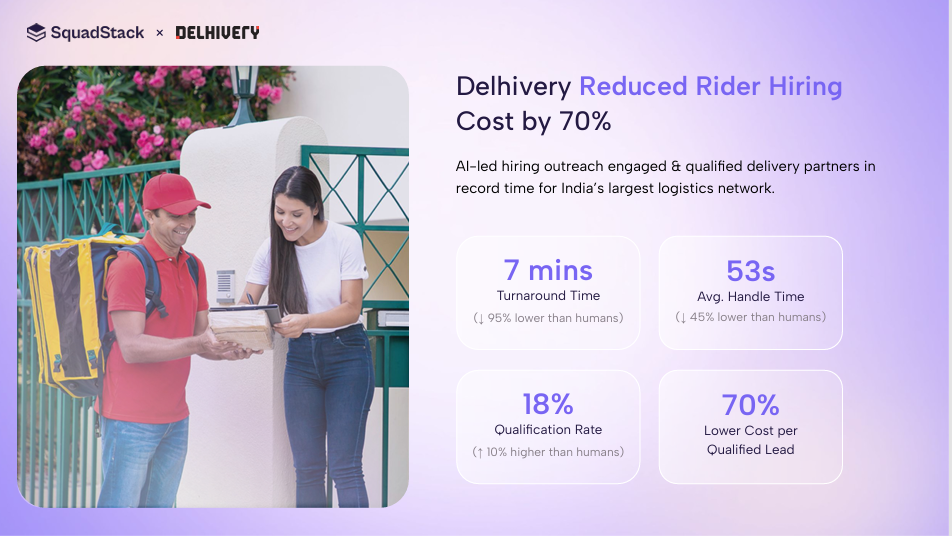
Similarly, in logistics, companies like Delhivery use SquadStack voicebots to manage NDRs, rider communication, and follow-ups. The voicebot updated systems automatically and handed over context to human teams only when required, reducing turnaround times and improving operational efficiency.
Proven Scalability, Reliability, and Connectivity
Scalability is where many voice agents fail in real deployments. SquadStack Voicebots are already operating at enterprise scale, managing hundreds of thousands of calls per day with consistently high connectivity.
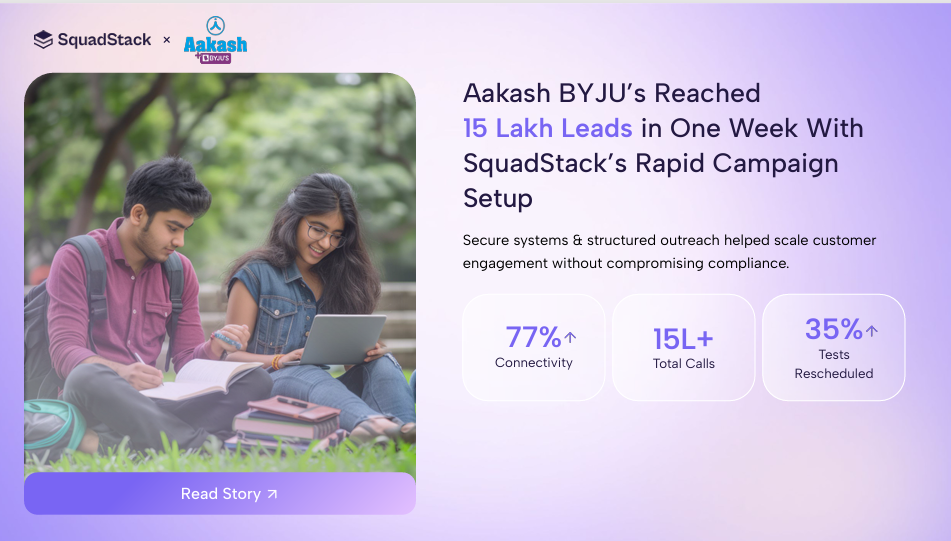
During peak campaigns, platforms like Aakash BYJU’s used SquadStack to reach 15 lakh leads in a single week, maintaining high connection rates without compromising call quality. Similarly, Upstox ran over 100+ campaigns, processing crores of leads while maintaining reliable performance.
These examples highlight why evaluating a voice agent’s scalability isn’t theoretical—it’s about proven performance under pressure.
Enterprise-Grade Compliance and Data Security
For regulated industries, evaluating a voice agent means placing heavy emphasis on compliance and data protection. SquadStack Voicebots are built with India data residency, encrypted call storage, audit trails, and consent handling by default.
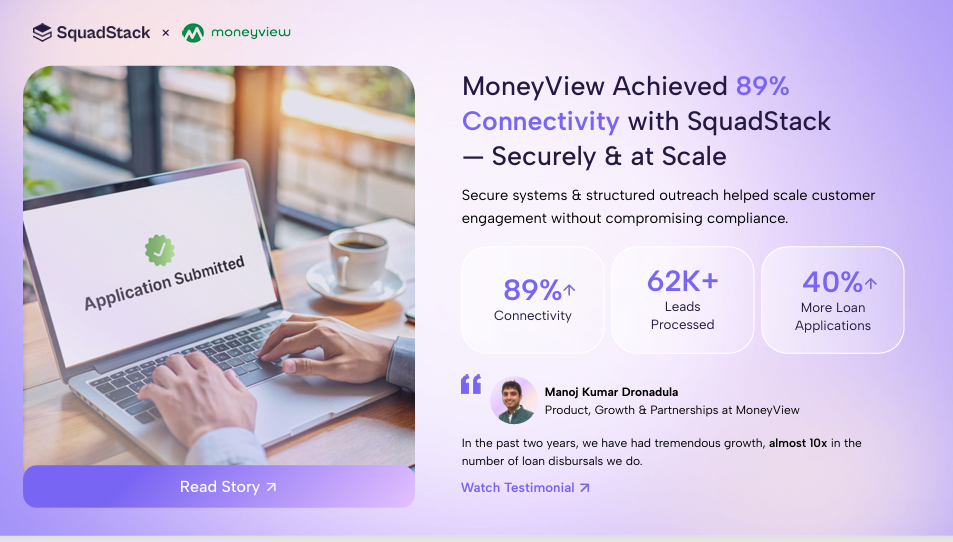
A fintech company like MoneyView, which handles sensitive financial data at scale, relied on SquadStack’s secure infrastructure to achieve 89% connectivity without compromising regulatory requirements. Similarly, healthcare platform Medfin used SquadStack voicebots for appointment booking and follow-ups, ensuring patient data security while improving booking rates by 25%.
These deployments show how compliance and scale can coexist when voice automation is designed correctly.
Continuous Optimization Through AI + Human Oversight
Unlike voice agents that are deployed and left unchanged, SquadStack voicebots continuously improve through a combination of AI learning and human quality oversight.
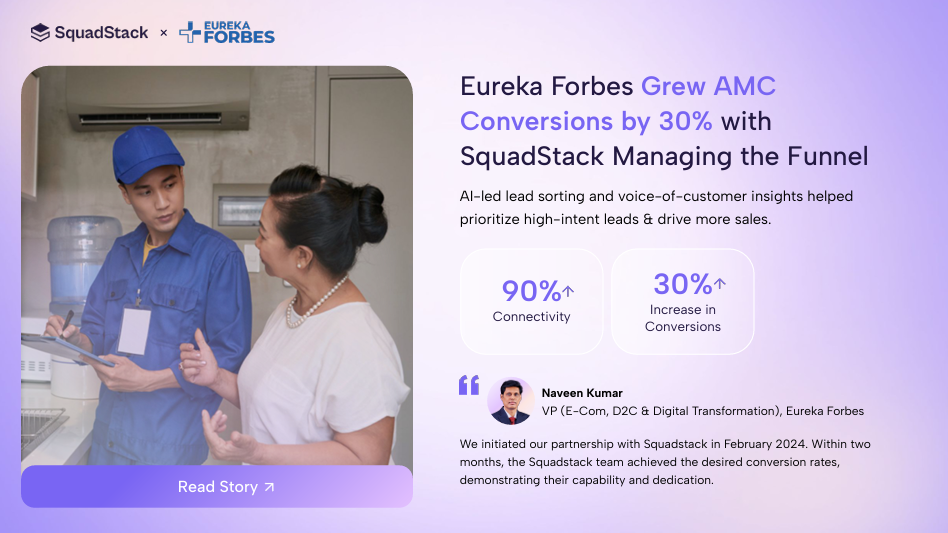
For example, Eureka Forbes used SquadStack to manage AMC sales and renewals. By analyzing call transcripts, objections, and drop-off points, SquadStack continuously optimized messaging and follow-up timing—resulting in a 30% increase in conversions within a short period.
This ongoing optimization is supported by dedicated success managers, data analysts, and QA teams who actively monitor performance. For businesses evaluating voice agents beyond a pilot phase, this ability to improve outcomes over time is a major differentiator.
Conclusion: Choosing the Right Voice Agent for Long-Term Success
Selecting the appropriate voice agent is not merely a tech choice—it is a business commitment. As voice automation becomes more deeply embedded in sales, support, and customer engagement, the cost of choosing the wrong solution only grows. That’s why understanding how to evaluate a voice agent properly is essential for businesses that want consistent results, not short-term wins.
The best voice agents are those that work well beyond the demo. They can model real customer behavior, scale well during peak times, integrate smoothly with existing business processes, and improve with each conversation. By considering factors such as conversation quality, accuracy, compliance, scalability, and business results, businesses can see past the marketing hype and focus on what really matters.
Equally important is the provider behind the voice agent. Long-term success depends on continuous optimization, strong support, and a deep understanding of business use cases. Voice agents that are actively monitored, refined, and aligned with business goals deliver far more value than systems that are deployed once and left unchanged.
Ultimately, knowing how to evaluate a voice agent allows businesses to move with confidence—choosing a solution that grows with them, protects customer trust, and delivers measurable results at scale. As customer expectations rise and competition intensifies, the right voice agent can become a lasting advantage rather than just another tool in the stack.