.svg)





Hyper-Personalised Outbound Call Scripts Using Customer Lifecycle Data
October 6, 2026
|

13 min read
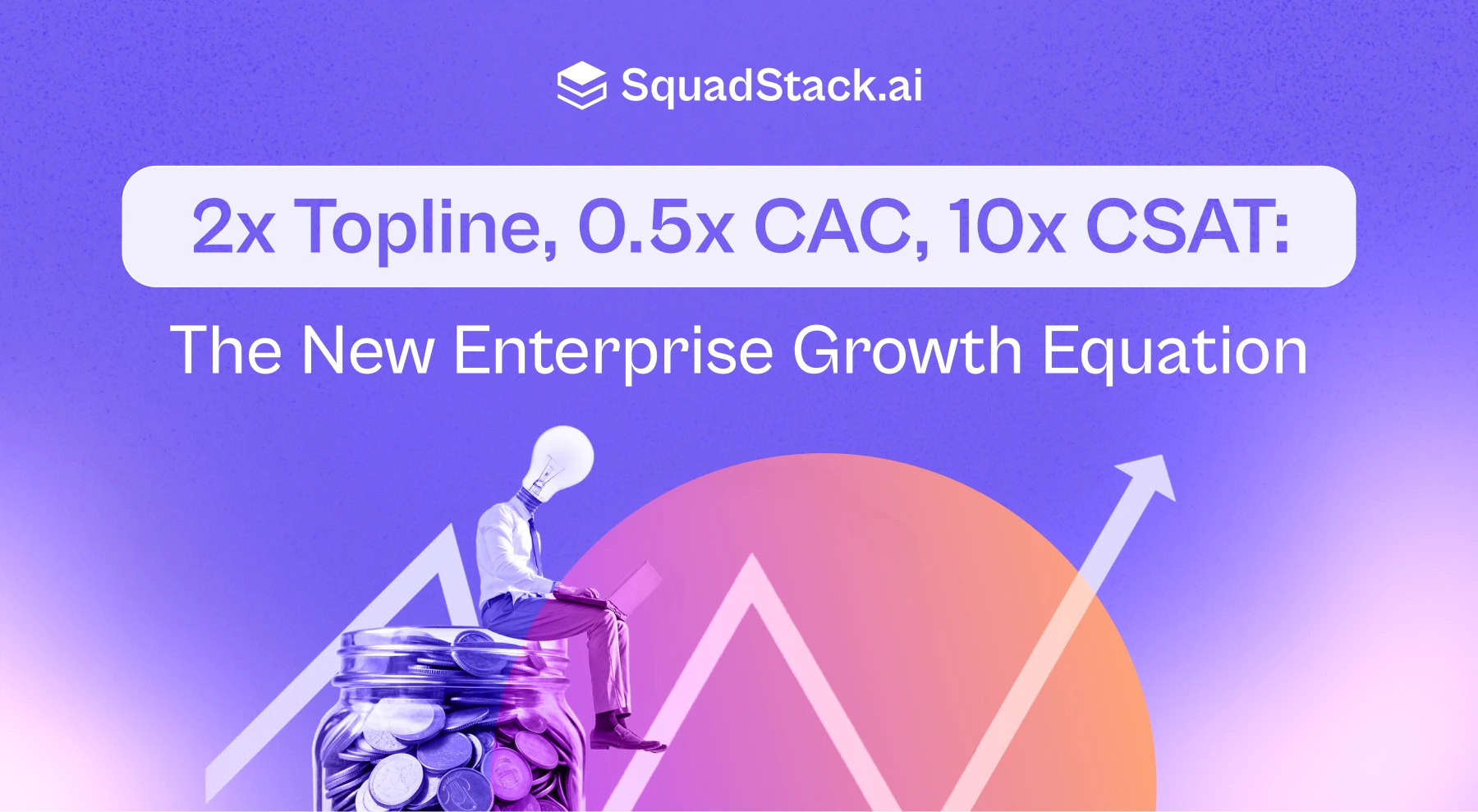
The new enterprise growth equation: double your topline, halve CAC, and boost CSAT 10x with AI-powered orchestration and personalized outreach.
Every week, there’s another headline about automation, AI, and revenue efficiency. But behind the noise, one question keeps resurfacing inside every boardroom:
“Can AI really drive growth—not just cost savings—without trashing CX?”
Most consumers don’t hate brands.
They hate being spammed by brands.
The old world was “Authandar days” — 20 missed calls from unknown numbers, 10 SMSes after you’ve already bought the product, retargeting that follows you for weeks. Every new “growth experiment” came at the cost of customer love.
What we’re seeing now with our enterprise partners is a different pattern:
Not as a one-time optimisation — but as a compounding system that gets better every day.
For most enterprises, the funnel looks like a sequence: ads → leads → nurture → calls → conversion → service.
Each team runs its own motion. Channels operate in silos. The customer journey depends on luck, timing, and manual intervention.
.webp)
The result:
Even the best sales or retention teams struggle because the system isn’t built to learn — or to listen.
What we’re building with our enterprise partners looks different.
It starts with a simple shift:
Stop thinking in terms of “channels.”
Start thinking in terms of “propensity + preference.”
Every user is engaged based on:
That means:
Across WhatsApp, voice, SMS, email, and in-app, the experience feels orchestrated, not fragmented.
To the end customer, it feels less like “marketing” and more like “this brand just gets me.”
The old playbook for growth was:
“If conversions are low, dial harder. Send more. Push more.”
The new playbook is:
“If conversions are low, learn faster. Personalise more. Waste less.”
Because we’re majority AI-driven, we can:
This is why we see CSAT and NPS move up, even as the number of automated touchpoints increases. Customers don’t feel hunted; they feel helped.
Every interaction — whether it results in a sale, a decline, a retry, or a support query — feeds a shared intelligence layer powered by our:
With every cycle, routing, messaging, timing, and strategy improve.
This creates a flywheel:
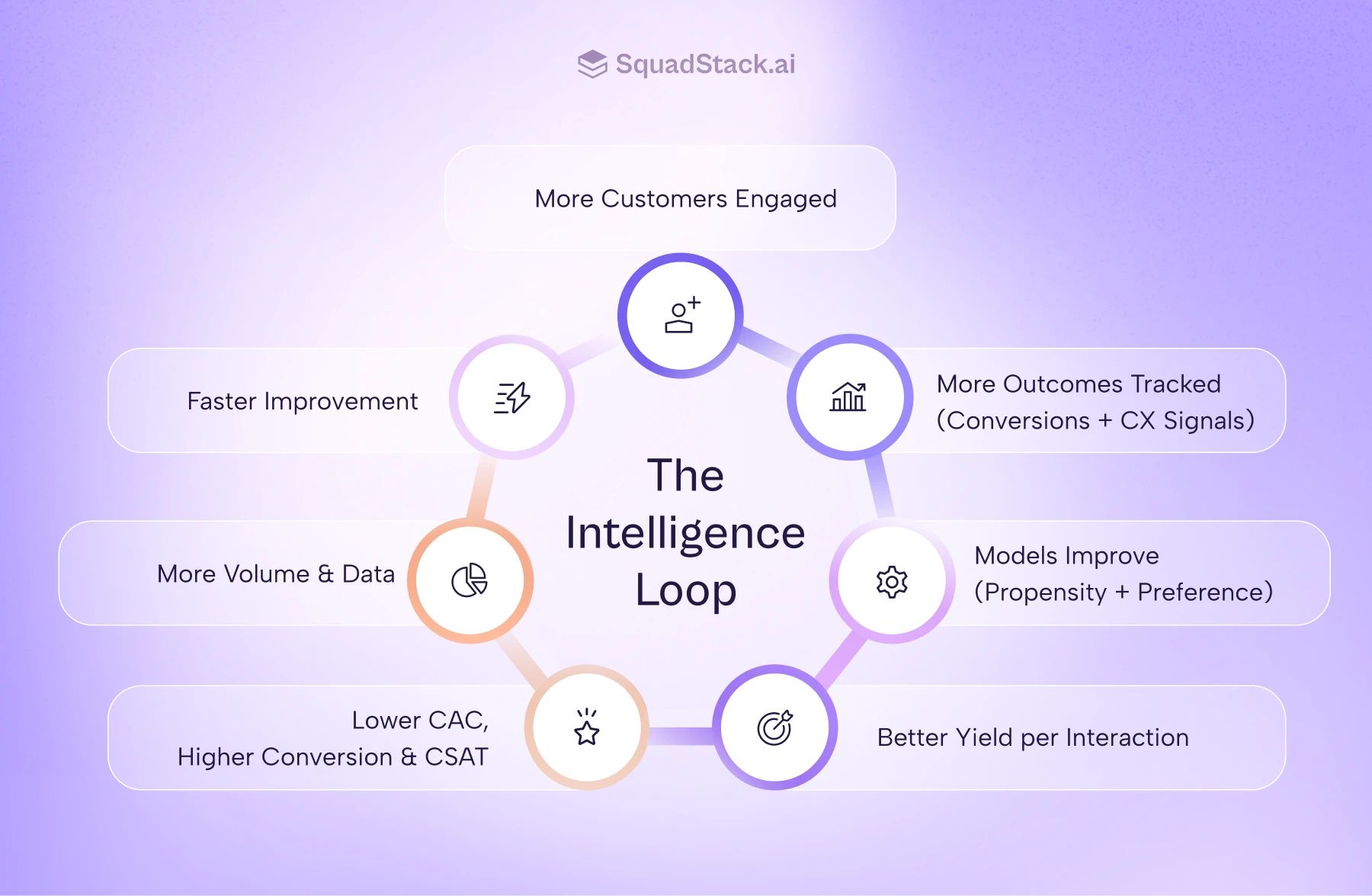
More customers engaged
→ More outcomes tracked (conversions + CX signals)
→ Models improve (propensity + preference)
→ Better yield per interaction
→ Lower CAC, higher conversion, higher CSAT
→ More volume and more data
→ Faster improvement
The same system that reduces CAC is the one that improves CX — because both are side-effects of waste reduction and better targeting.
This isn’t a tactical “campaign optimisation.”
It’s a revenue & experience operating system built around:
Our best partners don’t bring us in to “experiment with AI.”
They bring us in at the AOP-planning table and say:
“Here’s our revenue target, our CAC ceiling, and our CX bar.
Let’s design the system that hits all three.”
Once the system learns, scaling isn’t linear.
It becomes efficient and exponential — for the P&L and for the experience.
When you get this right, something subtle but powerful happens:
That’s where 10x CSAT directionally comes from — not from one magic message template, but from a system that is constantly learning to be less annoying and more useful.
AI won’t replace enterprise sales, activation, or service teams.
But companies that build AI-first engagement infrastructure will consistently:
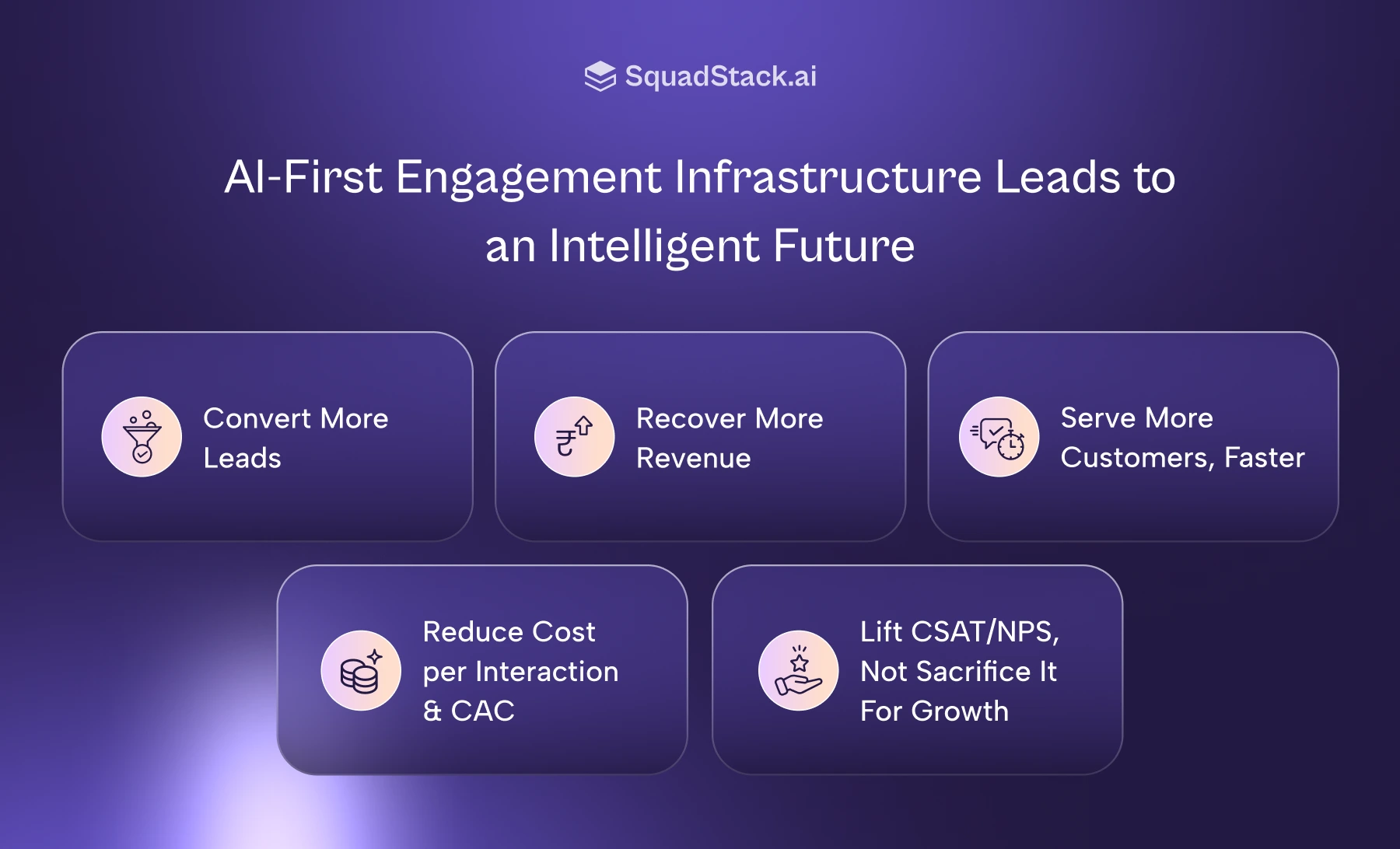
And they’ll build a proprietary performance advantage no competitor can easily copy — because the intelligence is earned, not installed.
If you're an enterprise leader thinking about:
—we’d love to partner with you at an AOP level, not as a vendor, but as your growth & CX operating system.
Because the next generation of India’s category-defining companies won’t just grow faster —
they’ll grow in a way their customers actually love.