.svg)






Subscriber Churn Prediction Calls: AI Voice for OTT and Streaming
October 10, 2026
|

12 min read
.png)
Building voice AI for India demands more than speech recognition. It requires understanding culture, dialect shifts, and conversational behavior.
Every major technology has a geography that forces it to grow up.
For Voice AI, that geography is India.
Not because the market is broken or behind, but because everyday conversations here carry an unmatched level of linguistic range, cultural nuance, and contextual variation. Building voice systems for India demands depth, adaptability, and continuous learning. There are no shortcuts.
India officially recognizes 22 languages, but real usage extends far beyond that. Linguistic surveys estimate more than 19,500 dialects spoken across the country. Language shifts not only across states, but across districts and cities, often within a short distance.
Hindi spoken in Delhi differs from Hindi in Kanpur.
Tamil in Chennai sounds different from Tamil in Madurai.
Marathi, Bengali, Telugu, Kannada and Punjabi all shift with geography, class, and context.
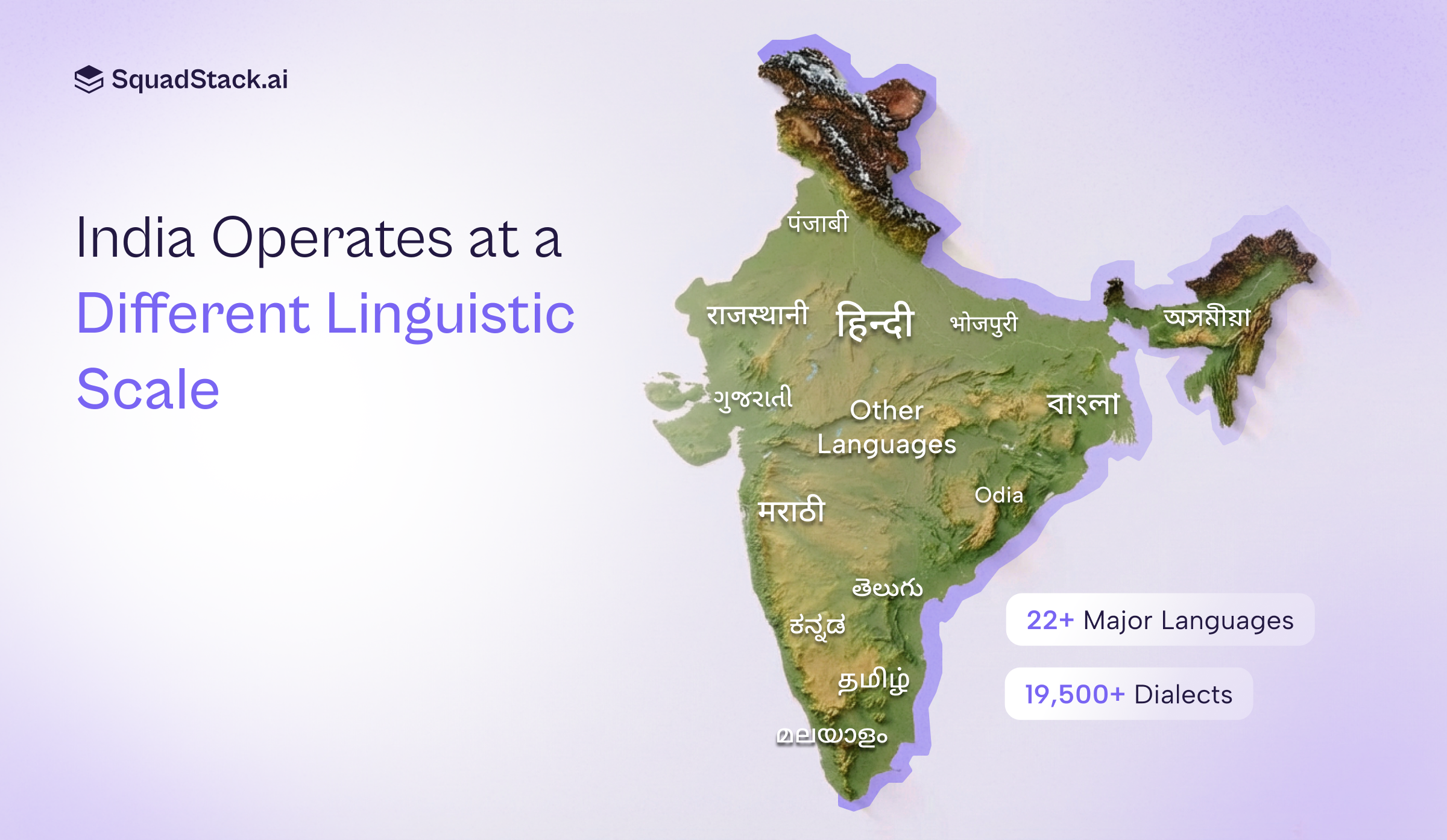
This is how language evolves in a large, interconnected population.
Voice AI built for India must function across many valid forms of the same language at once.
Most voice systems are trained on structured speech patterns.
Indian conversations are fluid.
People mix languages instinctively. English is used for transactions and objects. Native languages carry emotion and comfort. Dialects surface when trust builds. A single sentence can move between Tamil, Hindi, and English without effort.
Meaning often lives beyond words.
Pauses, repetition, tone changes, and hesitation carry intent.
Short responses can signal agreement, uncertainty, reluctance, or polite dismissal depending entirely on delivery.
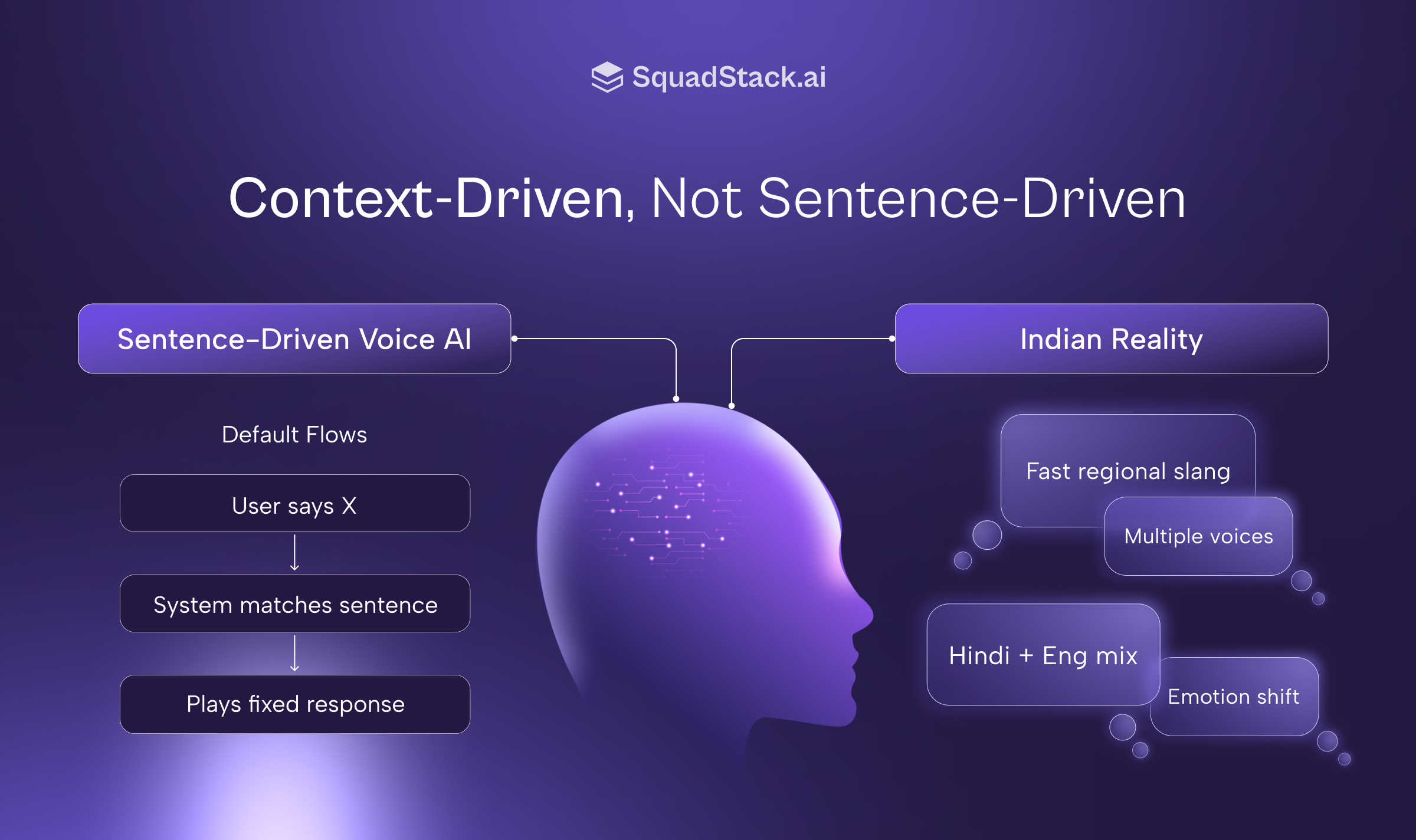
Strong Voice AI performance in India comes from understanding conversational behavior, not just recognizing vocabulary.
One of the hardest learnings in Indian voice interactions is that overly polished systems feel distant.
Hyper-neutral accents feel unfamiliar.
Excessively formal phrasing sounds corporate.
Perfect grammar feels scripted.
Indian conversations prioritize familiarity and efficiency. People engage longer when the voice feels natural to everyday interactions they already trust, such as speaking to a shopkeeper, delivery agent, or bank executive.
The benchmark is comfort, not correctness.
Voice expectations in India vary continuously.
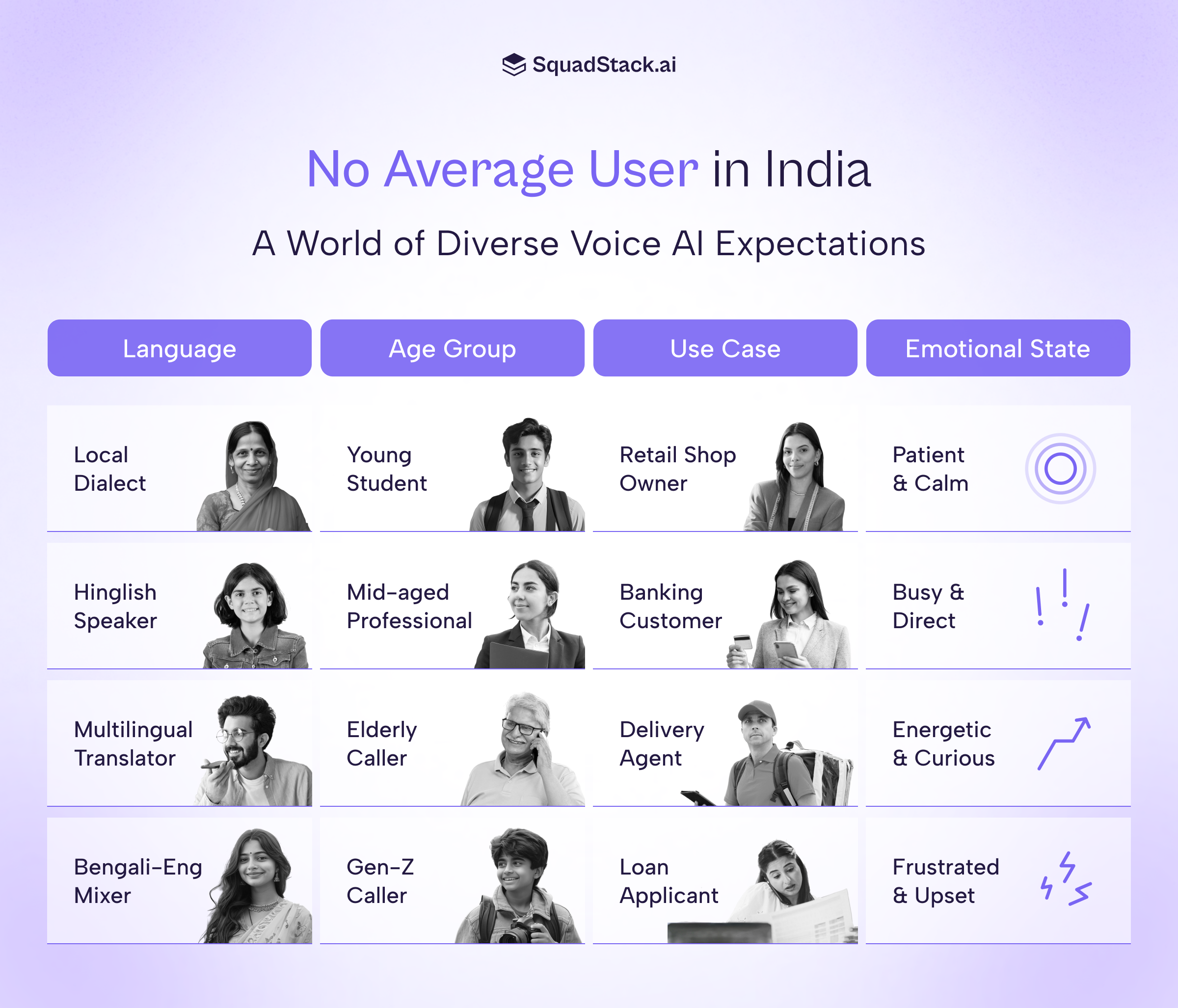
They change with region, age, education, use case, and emotional state. A system may need to sound calm in one conversation and direct in the next. It may need to be respectful in one language and informal in another, sometimes within the same call.
Effective Voice AI systems here adjust tone dynamically rather than committing to a single speaking style.
This requires intent understanding, contextual memory, and behavioral sensitivity working together in real time.
There is no moment when Voice AI suddenly “gets India right”.
Progress shows up gradually.
Through better pacing.
Clearer phrasing.
Fewer awkward transitions.
More natural interruptions and responses.
Improvements are incremental. One percent better conversations repeated at scale.
Then small signals begin to appear. Users pause less. They respond more casually. They address the agent naturally, the way they would address another person during a routine interaction.
Those moments matter more than benchmarks.
Voice AI success in India is closely tied to trust and comfort.
People stay on calls that feel familiar.
They engage when the system respects their way of speaking.
They respond when the conversation feels socially aligned.
India does not make Voice AI harder.
It makes it better.
If a system can operate across shifting languages, blended speech, and deeply contextual conversations at scale, it becomes stronger everywhere else.
That is why India is not just another market for Voice AI.
It is the boss fight.
And solving it changes how you build for the world.