.svg)

Conversational AI (artificial intelligence) technology drives a new era of intuitive, efficient, and personalized communication, from virtual assistants to enhancing customer service through chatbots and voice agents. Conversational AI is a practical business tool that thousands of companies are using right now to handle customer calls, screen job applicants, recover lost revenue, and automate support operations.
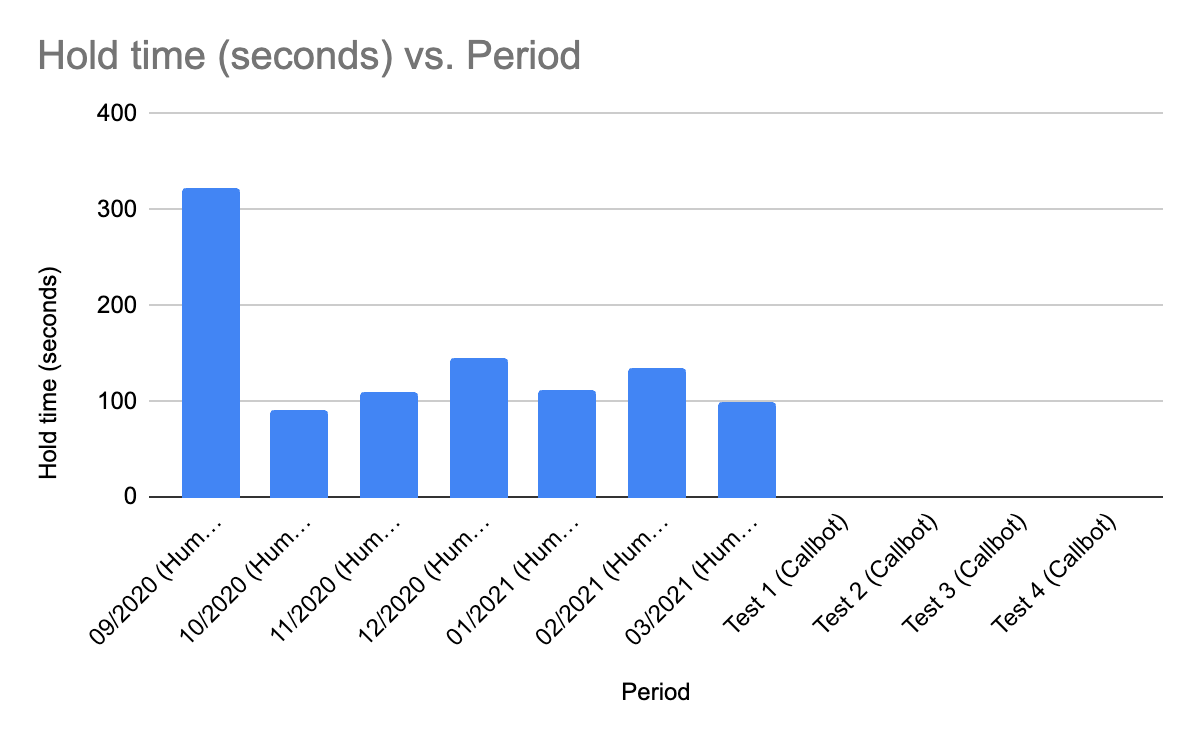
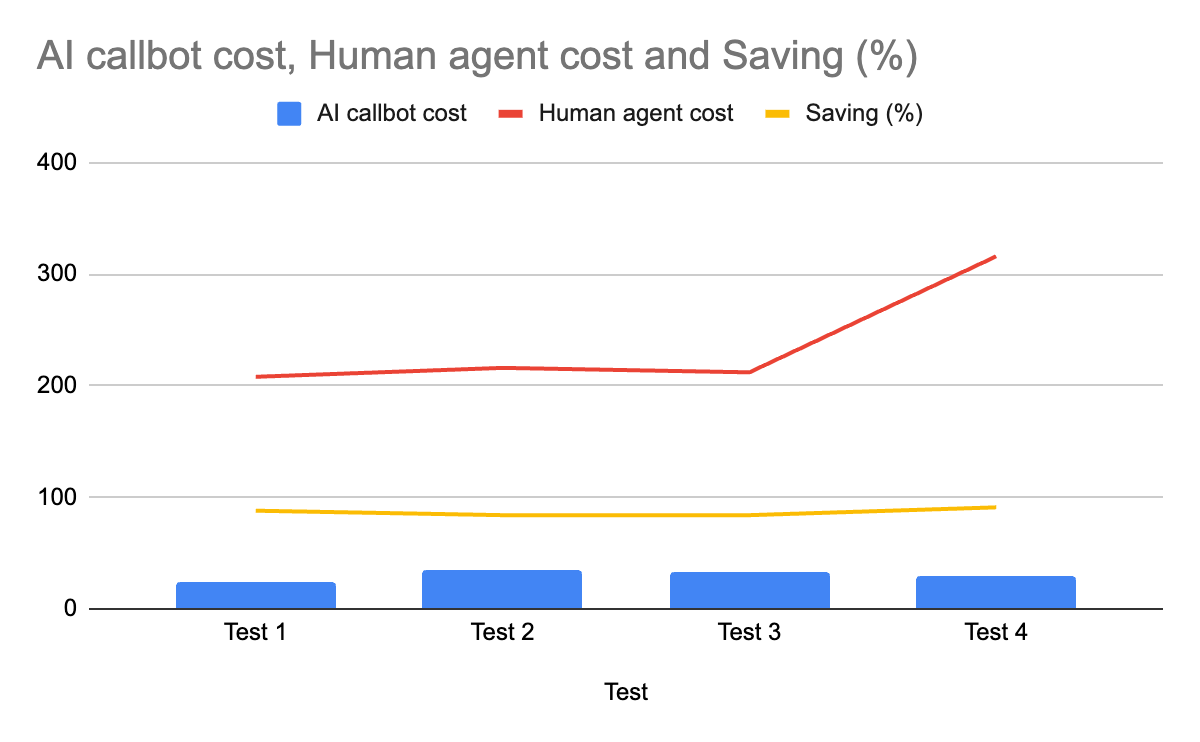
Platforms built conversational AI models are already reducing call processing time to roughly one-third of what human agents require. According to research published in the International Journal of Artificial Intelligence, AI-based callbot systems have demonstrated cost savings of more than 80 percent compared to human agent call handling. Customer waiting time dropped to near zero for AI-handled calls, compared with 90 seconds to over 300 seconds for human-handled calls.
Integrating conversational AI chatbots and AI agents presents significant opportunities for businesses to improve digital customer engagement, and deliver more personalized experiences. Many industries, including retail, banking, education, hospitality, tourism, and healthcare, are adopting conversational AI tools for customer support, sales, data collection, and process automation. These AI-driven solutions enhance efficiency, improve customer engagement, and streamline operations, making them essential to modern business strategies.
What is Conversational AI?
Conversational AI is artificial intelligence technology that enables computers to understand, process, and respond to human language in a natural and contextually relevant way, using machine learning and natural language processing Conversational AI includes set of technologies that combine natural language processing (NLP), machine learning (ML), automatic speech recognition (ASR), and contextual understanding to facilitate human and technological interactions.
Conversational AI models combine machine learning (ML) and natural language processing (NLP) to manufacture advanced tools for businesses like chatbots and voice bots. These advanced tools handle customer service, sales, troubleshooting, and more. Widely used across industries, these AI systems enable businesses to engage customers innovatively.
How Conversational AI Platforms Work
Conversational AI processes every interaction through a series of connected steps. These steps happen in a matter of seconds, making the experience feel smooth.
Understanding how it works beneath the surface helps businesses decide why some platforms perform better and what to look for when evaluating options. Think about the last time you asked a voice assistant a question and got an instant, accurate answer. That experience is the result of multiple technologies working together in real time, passing information from one stage to the next in a sequence shared below:
Step 1: Input Recognition: The User Provides Input
Everything begins when a user speaks or types something. This sounds simple, but it is the most important part of the entire process. Two people asking the same question will phrase it differently. One might say "where is my order" while another says "I need to track my delivery" and a third asks "has my parcel shipped yet."
The process begins when a user speaks or types something. For voice input, Automatic Speech Recognition (ASR) converts spoken words into text. This involves signal processing and feature extraction to clean the audio, followed by acoustic and language modelling to produce an accurate transcript.
Before the system can understand meaning, it needs to prepare the raw input. This normalisation process involves several sub-steps that happen almost instantaneously. These steps together ensure that the system operates on clean, structured input that accurately represents the user's message, regardless of how it was originally phrased.
Step 2: Natural Language Processing Identifies Intent and Meaning
With clean, normalised text in hand, the Natural Language Processing module gets to work. Once the input is captured, Natural Language Processing (NLP) analyses the text to identify what the user actually means. This involves several sub-processes, including sentence segmentation, tokenisation (breaking text into individual words), removal of stop words that carry no meaningful information, and stemming to reduce words to their base forms.
Simultaneously, entity extraction identifies the specific details mentioned in the message. Dates, account numbers, product names, locations, and other key information are extracted and tagged for use in the response. A message like "I want to return the blue jacket I ordered last Tuesday" contains multiple entities. The system identifies the product type, colour, and approximate purchase date, all of which are required to process the request correctly.
Context from earlier in the conversation is also factored in at this stage. If a user said "I have a problem with my order" two messages ago and now says "it still has not arrived," the system understands that "it" refers to the order mentioned previously
Step 3: The Decision-Making Module Selects the Best Response
Based on the identified intent and context, the system decides what action to take. This is handled by the decision-making module, which draws on a knowledge base of trained scenarios and uses machine learning algorithms to select the most appropriate response.
For transactional requests, it triggers API calls to external systems such as CRM platforms, order management systems, or scheduling tools. For complex multi-step processes, it may need to ask clarifying questions to gather additional information before proceeding.
Step 4: Response Generation: Natural Language Processing Creates the Response
Having decided what to say, the system now needs to convey that message clearly to the user. Natural Language Generation converts the intended output into clear, natural-sounding language. It adapts the formality and vocabulary of the response to match the user's communication style. It structures information in an easy-to-understand way. It sounds like a helpful person rather than a database query result.
Step 5: Output Delivery: Natural Language Generation Creates the Response
The final step is delivering the response in the appropriate format. For voice-based interactions, Text-to-Speech technology converts the text response into natural-sounding spoken audio.
For text-based interactions, the response appears directly in the chat interface. Over time, machine learning processes continuously refine responses based on feedback, improving accuracy and relevance with each interaction.
AI Call Bot vs Human Agent: Key Performance Metrics
|
Metric |
AI Call Bot |
Human Agent |
Improvement |
|
Average wait time |
0 seconds |
119 seconds average |
100% reduction |
|
Average call processing time |
96 seconds |
269 seconds average |
64% faster |
|
Average cost per call (Test 1) |
0.46 per call |
4.00 per call |
88% savings |
|
Average cost per call (Test 2) |
0.63 per call |
4.00 per call |
84% savings |
|
Average cost per call (Test 3) |
0.63 per call |
4.00 per call |
84% savings |
|
Average cost per call (Test 4) |
0.36 per call |
4.00 per call |
91% savings |
Source: Aattouri, Mouncif, Rida. Modeling of an artificial intelligence-based enterprise callbot. IAES International Journal of Artificial Intelligence, Vol. 12, No. 2, June 2023
What are the Core Components of Conversational AI Tools
Understanding each conversational AI component helps businesses evaluate platforms and set realistic performance expectations. Think of conversational AI like a well-run customer service team. One person listens and takes notes. Another interprets what was said and decides how to respond. A third communicates the answer clearly. A fourth learns from every interaction to improve future performance. Each role matters, and a weakness in any one area affects the overall experience. Conversational AI works the same way, with each component handling a specific part of the process, as shared below:
Machine Learning
Machine learning is a subfield of artificial intelligence that uses algorithms, features, and datasets to improve the user experience continuously. As more interactions are processed, the system becomes better at recognising patterns and using them to make more accurate predictions.
In practical terms, machine learning allows a conversational AI to get smarter over time without being manually reprogrammed. It analyses thousands of past interactions to understand which responses led to successful outcomes. It refines intent classification, improves entity extraction accuracy, and better predicts what a user needs based on context and history.
Automatic Speech Recognition
For any conversational AI that operates over voice, whether a callbot or a voice assistant, Automatic Speech Recognition is the starting point of every interaction. Signal processing cleans the audio input and reduces background noise. Feature extraction identifies the acoustic properties of the speech, such as frequency patterns and sound duration. Acoustic modelling maps these features to phonemes, the basic units of sound that make up words. Language modelling then combines these phonemes into words and sentences that reflect how language is actually used.
Businesses deploying voice-based conversational AI should closely monitor ASR performance. A system trained primarily on one accent or dialect will perform significantly worse on others. For Indian businesses in particular, platforms that support local accents and languages, including Hinglish, Hindi, Tamil, and Telugu, will deliver better outcomes than generic English-optimised systems.
Natural Language Processing
Natural language processing is the core analytical engine of conversational AI. It is the current method of analysing language using machine learning, enabling the system to move from processing words to understanding meaning.
NLP ensure that the system works with clean, structured input that accurately represents the user's message. A message sent casually, in informal language, produces the same intent signals as a formally worded sentence.
Natural Language Understanding
Natural Language Understanding is the system's comprehension layer. It sits within NLP and focuses specifically on interpreting what a user means, not just what they literally said.
NLU performs two primary functions. Intent classification determines what the user wants to achieve, whether that is getting information, completing a transaction, or requesting a specific action. Entity extraction identifies the specific details mentioned in the message, such as account numbers, dates, product names, locations, and amounts.
NLU also increasingly incorporates sentiment analysis, which detects emotional tone within a message. A user who types "this is absolutely ridiculous" is expressing frustration, even if the words do not explicitly describe an emotion. Detecting that frustration allows the system to adjust its response tone or trigger escalation to a human agent before the interaction deteriorates further.
Dialogue Management
Dialogue management is the component that keeps a conversation coherent and productive across multiple exchanges. Without it, a conversational AI treats every user message as a completely new, isolated request with no memory of what came before
For example, consider a conversation where a user asks about their order status, then asks to change the delivery address. Each of these messages connects to the previous one. Dialogue management ensures the system understands these connections and responds to each message in the context of everything that has been said before.
Natural Language Generation
Natural Language Generation handles the creation of responses. It takes the system's intended output, which might be a piece of retrieved information, a confirmation of a completed action, or a request for additional details. It converts it into clear, natural-sounding language that fits the conversation's context and tone.
Text-to-Speech Synthesis
For voice-based conversational AI, Text-to-Speech synthesis is the final step that converts a text response into spoken audio that the user hears.
Early TTS systems produced robotic-sounding speech that was immediately recognisable as artificial. Modern TTS systems use neural network-based approaches that produce speech with human-like intonation. They slow down for important details, such as account numbers and phone numbers. They speed up slightly for conversational passages. They adjust pitch and emphasis to reflect the meaning of what they say.
Integration Infrastructure
The final core component is not a language technology but an operational one. Integration infrastructure refers to the API connections that link a conversational AI system to the external systems it needs to access to complete user requests.
A conversational AI without integration cannot do much beyond answering general questions. With integration, it can retrieve a customer's account history from a CRM, check appointment availability in a scheduling system, process a payment through a billing platform, update an order status in an eCommerce system, or retrieve a personalised product recommendation based on browsing history.
How the Components Work Together
Understanding each component individually is useful, but the real insight comes from seeing how they work together as an integrated system.
A user calls a customer support line. ASR converts the spoken question into text. NLP normalises that text and identifies the intent and relevant entities. The decision-making module, powered by machine learning, selects the appropriate response pathway and triggers an API call to retrieve the relevant customer account data. NLG formulates a clear, natural-sounding response using that data. TTS converts the response to speech. The user hears a helpful, accurate answer in under a second.
What Is the Key Differentiator of Conversational AI Tools
The single most important differentiator of conversational AI is its ability to understand the meaning and intent behind human language, not just recognise the words themselves. It can then respond in a way that feels natural, contextually relevant, and genuinely helpful. This distinction separates conversational AI from every earlier generation of automated communication technology.
For Example: A customer who says "I want to report a water leak in my bathroom" and one who says "I have a water damage problem" are expressing the same need. A conversational AI system recognises both as a home insurance claim intent and responds accordingly.
The Five Key Differentiators in Detail
While intent understanding is the core differentiator, several closely related capabilities combine to make conversational AI tools genuinely distinct from others.
1. Contextual Awareness Across a Full Conversation
Conversational AI maintains context across an entire dialogue. It remembers what was said earlier in the conversation and uses that context to interpret each new message correctly.
For Example: If a user says "I have a problem with my order" and then two messages later says "it still has not arrived," the system understands that "it" refers to the order mentioned
2. Continuous Learning and Improvement
Conversational AI systems improve over time through machine learning Every interaction generates data that the system uses to refine its understanding of intent. This make the system improved after every conversation.
3. Natural, Human-Like Communication
Conversational AI generates responses that sound natural rather than robotic. Natural Language Generation creates clear worded responses that adapt in tone and formality to match the user's communication style.
4. Real-Time Action Execution
Conversational AI does not just answer questions. It connects to external systems through APIs and takes action on behalf of the user in real time. It can retrieve account information from a CRM, check appointment availability in a scheduling system, update an order status, or trigger a workflow in a connected business application.
5. Scalability Without Quality Degradation
A human agent team degrades in quality under high volume. Response times increase. Errors become more frequent. Conversational AI handles hundreds or thousands of simultaneous interactions with identical quality.
How Businesses Need Conversational AI to Boost Efficiency and Revenue?
For SMEs and large enterprises looking to scale their operations and improve customer experience, Conversational AI is a transformative tool that redefines efficiency and profitability. It can help you engage customers better, reduce costs, and boost revenue. Here's why it matters. Below, we highlight key reasons why businesses should adopt it to enhance customer engagement, improve operational efficiency, and deliver a superior customer experience.
Industries in India Benefiting from Conversational AI
Businesses increasingly use generative AI tools to deliver human-like responses in customer interactions. With the rise of mobile devices and digitalization, customers now expect instant online engagement with brands.
E-commerce and Retail
Online stores are using chatbots to handle customer inquiries, recommend products, and assist with payments. This improves conversion rates and enhances the shopping experience.
Use Cases of Conversational AI in E-Commerce
- Product Recommendations: AI suggests products based on browsing history, purchase patterns, and customer preferences.
- Customer Service: AI chatbots can efficiently handle inquiries, troubleshoot issues, and guide customers through purchasing.
- Order Management: AI provides order tracking, updates and facilitates returns and exchanges.
- Lead Generation: AI engages potential customers and qualifies leads for sales teams.
- Personalized Shopping Journeys: AI customizes the shopping experience for each customer, ensuring relevant product suggestions and offers.
BFSI (Banking, Financial Services, and Insurance)
With the increasing adoption of conversational AI in the banking and fintech sectors, even regulatory bodies like the RBI are exploring these technologies to enhance customer experience. Conversational AI is automating customer support, loan applications, insurance inquaries and account inquiries, improving efficiency for banks and financial institutions while reducing manual workload. Conversational AI in the Banking industry improves traditional banking by integrating real-time, interactive support through chatbots, IVR, and calling agents, allowing customers to receive instant assistance during transactions.
For Example: Suppose a customer is making a credit card transaction and wants to check their credit limit. Instead of manually searching for it, they can instantly retrieve their statement via a chatbot.
Healthcare Industry
Hospitals and clinics use AI assistants to schedule appointments, answer patient queries, and provide health advice, saving time for healthcare staff and patients alike. Conversational AI is now addressing critical challenges in healthcare, such as clinician burnout and patient engagement. AI-powered chatbots and virtual assistants enhance patient experiences by automating key tasks such as bed booking, answering FAQs, and providing answers to inquiries.
Travel and Hospitality Industry
AI tools handle booking confirmations, cancellations, travel recommendations, and feedback collection, ensuring a smoother customer experience.
Key Applications:
- Reservations: Guests can quickly check availability, book rooms, and modify reservations via AI voice bots, reducing friction and improving efficiency.
- 24/7 Customer Support: AI-powered assistants respond instantly to common inquiries, allowing staff to focus on more complex guest needs.
- Contactless Check-in & Check-out: AI facilitates smooth, touch-free check-in and check-out processes, reducing wait times and enhancing convenience.
- Guest Feedback & Insights: AI-driven surveys and feedback collection help businesses analyze guest sentiment, identify trends, and improve service quality.
EdTech and Education Industry
Chatbots assist students with course queries, admissions, and learning support, ensuring scalability for education platforms.
Key Applications of Conversational AI in Education
Smart Chatbots for Student Support
- Admissions & Enrollment (e.g., Georgia State’s "Pounce" chatbot reduced summer melt by 22%).
- Campus FAQs (e.g., Deakin University’s "Genie" chatbot handles 80K+ queries yearly).
Accessibility & Inclusivity
- Voice Assistants (e.g., Amazon Alexa in classrooms) aid visually impaired students.
- Real-Time Translation (e.g., Microsoft Translator) supports multilingual education.
Automated Proctoring & Assessments
- AI Proctoring (e.g., Proctorio) monitors exams for integrity.
- Instant Feedback Systems (e.g., Gradescope) speed up grading.
Most Common Conversational AI Applications
Conversational AI delivers seamless, efficient, and personalized experiences, making it a powerful tool with diverse industry applications. Automating repetitive tasks, thus delivering real-time assistance and providing intelligent insights by interacting with customers, employees, and stakeholders. Here are the most common applications of conversational AI are shared below:
Customer Support and Service
Conversational AI is used in customer support to handle inquiries, troubleshoot issues, and provide instant resolutions, thus improving customer experience. AI-powered virtual agents in contact centers operate 24/7, reducing response times and improving customer satisfaction. They can answer frequently asked questions, assist with refunds, and escalate complex issues to human agents.
Example: An AI Voice bot on an e-commerce platform that helps users track orders, find products, or process returns.
Live Chatbots
AI-powered chatbots provide instant responses to customer queries, improving response times and customer satisfaction.
Automated Ticketing Systems
These systems categorize, prioritize, and route support tickets to the appropriate departments for faster resolution.
AI-Powered Helpdesks
Conversational AI integrates with helpdesk solutions to automate FAQs and provide quick solutions to common issues.
Virtual Assistants in Devices
Virtual assistants like Siri, Alexa, and Google Assistant rely on conversational AI to perform tasks such as setting reminders, managing schedules, controlling smart devices, and answering questions.
Example: Using Alexa to control home appliances or request weather updates.
Sales and Lead Generation
Businesses use conversational AI to engage prospects, qualify leads, and guide them through the sales funnel. These Artificial intelligence tools can recommend products, provide personalized offers, and follow up on inquiries, boosting conversion rates.
Example: AI chatbots and Voice agents can initiate conversations with website visitors to understand their needs and suggest relevant services.
AI Sales Assistants
AI sales and marketing assistants help businesses engage potential customers, answer inquiries, and guide them through the sales funnel.
Automated Follow-ups
Conversational AI can send timely follow-ups to leads, nurturing prospects and increasing conversion rates.
Lead Qualification Bots
AI-driven bots assess potential customers based on predefined criteria and prioritize high-quality leads.
Coversational AI Chatbots
Conversational AI chatbots is a important application of coversational artificial intelligence, enabling human-like interactions between machines and users. These chat bots use speech recognition and text-to-speech capabilities to enable voice interactions. They utilise NLP and machine learning to understand context and generate more dynamic responses.
Common Use Cases of Conversational AI Chat bots
- Customer Support – Resolving inquiries and complaints efficiently.
- E-commerce – Recommending products and assisting with purchases.
- Healthcare – Providing symptom checks and scheduling appointments.
- Finance – Helping with transactions, fraud detection, and account management.
- HR and Recruitment – Screening resumes and scheduling interviews.
Conversational AI Use Cases: How Businesses Are Using It Today
Conversational AI is helping companies improve customer experience, reduce CAC, and deliver the best results in customer service, sales, healthcare, recruitment, and enterprise operations.
Understanding where conversational AI is actually working helps businesses identify the right starting point for deploying their own conversational AI solutions and tools. The use cases below are shared after good research and documented studies:
Customer Service and Support Use Cases
Customer support is where the combination of high volume, repetitive queries, and round-the-clock demand creates the clearest business use case for automation.
Customer waiting time for AI-handled calls dropped to near zero, compared with 90 seconds to over 300 seconds for human-handled calls during the same operational period.
Call processing time through conversational AI averaged between 1 minute 20 seconds and 2 minutes for resolved interactions. Human agents handling equivalent calls required between 4 minutes 20 seconds and 4 minutes 40 seconds. That is roughly one-third of the time, delivered consistently across every interaction without performance variation.
The cost impact is equally significant. The research paper on conversational AI and chatbots shows these findings from a different angle. It documents that chatbot implementation can decrease the average handle time for human agents by 12 percent, increase consumer engagement by 40 percent, and reduce overall wait times to 33 seconds or less.
Sales and Lead Qualification Use Cases
When a lead submits a form or takes an action that signals buying intent, every minute of delay reduces the probability of conversion. Chatbots can reduce routine response times by up to 80 percent and help businesses save approximately 30 percent on customer support costs.
For example, in sales contexts, SquadStack.ai conversational AI Agent can act as a first-line qualification agent. It engages every lead immediately, asks structured qualifying questions, collects relevant information, and passes qualified prospects to CRM and human sales representatives with full conversation context. Human sales teams then spend their time exclusively on conversations with prospects who have already demonstrated genuine interest and meet the defined qualification criteria.
Healthcare Industry Use Cases
Healthcare has high-volume patient communication requirements, and the cost of missed appointments or delayed care creates a strong practical case for automation.
Healthcare conversational AI Agents can automate appointment scheduling, provide medication reminders, and offer preliminary symptom assessments.
Example: SquadStack Conversational AI in Healthcare
A healthcare provider like Medfin needed a reliable way to manage patient calls, book appointments, and handle queries.
The Solution
With SquadStack’s Conversational Voice AI Agent, they automated patient interactions while keeping conversations natural and context-aware.
- Smart appointment booking with real-time intent understanding
- Personalized conversations using memory of past interactions
- Omnichannel outreach to improve patient connectivity
- Built-in quality checks & analytics for full visibility
- Flexible scaling based on demand
The Impact
- 25% increase in appointments booked
- 85.5% connectivity
- Better patient experience with faster, consistent communication
Financial Services and Banking
Conversational AI voicebots in finance can provide instant responses to common banking queries and offer personalised financial advice based on user data. They operate 24 hours a day, ensuring customers have access to banking services at any time. Specific financial services applications documented across the include:
- Fund transfer and bill payment processing through natural language conversation
- Personalised financial advice based on customer data and transaction history
- Fraud detection alerts and account security notifications
- Loan application status updates and document collection
- Customer onboarding and account setup guidance
- Loan Collection calls
Key benefits for financial services include:
- 24-hour availability: Customers access banking services at any time without visiting a branch
- Cost efficiency: Automating routine tasks reduces operational costs significantly
- Personalisation: AI algorithms analyse user data to provide tailored financial guidance
Education
The Voice AI technology is valuable for students for providing accessible, always-available learning support. Students who need help outside of normal academic hours can engage with conversational AI systems that provide guidance and explanation without requiring a human tutor to be available. Educational applications include:
- Tutoring support that guides students through complex concepts
- Instant feedback on assignments and practice exercises
- Personalised learning pathways adapted to individual progress
- Administrative support for enrolment, scheduling, and course information
- Language learning assistance through conversational practice
Recruitment and Candidate Screening
The technology is particularly valuable for high-volume recruitment scenarios where hundreds or thousands of candidates need to be screened quickly and consistently. Human recruiters receive only pre-qualified candidates who have already demonstrated relevant skills and experience through the conversational AI screening process. The AI call bot processes candidate responses through the same software used for customer interactions. Recruitment applications of conversational AI include:
- Initial candidate screening through structured conversational interviews
- Qualification assessment based on predefined criteria and response analysis
- Interview scheduling and calendar coordination
- Automated candidate status updates throughout the hiring process
- Collection of required documentation and information
- Consistent evaluation that removes interviewer variability from initial screening.
Industry Application Use Cases and Key Benefits for Conversational AI Tools
|
Industry |
Primary Use Cases |
Key Benefit |
|
Customer support |
FAQ handling, triage, routing, escalation |
Over 80 percent cost savings, near-zero wait times |
|
Sales |
Lead qualification, follow-up, and scheduling |
Faster response, higher conversion rates |
|
Healthcare |
Scheduling, triage, reminders, and mental health |
Reduced admin burden, better patient access |
|
Financial services |
Account queries, transfers, and fraud alerts |
24-hour access, personalised guidance |
|
Education |
Tutoring, feedback, and enrolment support |
Always-available learning assistance I |
|
Enterprise operations |
HR, IT support, knowledge retrieval |
Improved employee productivity |
|
IoT and smart home |
Voice control, scheduling, and information |
Normalised conversational interaction |
|
Recruitment |
Screening, scheduling, and status updates |
Consistent evaluation at scale |
|
eCommerce |
Order tracking, cart recovery, recommendations |
Increased engagement by 40 percent |
|
Insurance |
Claims filing, policy lookup, renewals |
Faster processing, reduced friction |
How do Conversational AI Voice Agents Benefit Businesses?
Adding Conversational AI voice agents into business operations can transform customer interaction. By enhancing operational efficiency, reducing costs, and improving customer engagement, these systems enable organizations to stay competitive in a rapidly evolving marketplace.
Automation of Routine Tasks: Conversational AI automates repetitive tasks, allowing human agents to focus on complex, high-value activities like resolving escalations or nurturing leads. This boosts productivity and service quality.
24/7 Availability: Conversational AI tools operate continuously without shift premiums, and overtime costs. Customers receive immediate responses at any hour, which improves satisfaction and increases the frequency of engagement with the brand. For businesses serving customers across multiple time zones, this availability is a significant competitive advantage.
Reduced Agent Costs: Lower reliance on human agents leads to significant savings. Staffing customer service operations around the clock is expensive. Conversational AI reduces costs by handling high volumes of routine interactions without requiring additional headcount. Businesses can also reduce costs related to training, and management overhead in large human agent teams.
Lower Training Expenses: No extensive onboarding is needed; AI improves over time via machine learning. The infrastructure cost of adding conversational AI capacity is substantially lower than the hiring and onboarding cost of equivalent human capacity.
Efficient Resource Allocation: AI handles routine inquiries, enabling human agents to focus on critical or nuanced tasks.
Multilingual Support: Communicates in multiple languages, serving diverse customer bases and breaking language barriers.
Consistency in Service: AI delivers consistent performance and tone, enhancing trust and reliability.
Lead Qualification: Engages, qualifies, and passes leads to sales teams, improving sales funnel efficiency.
Faster Response Times: Delivers instant responses, reducing wait times, which is crucial in industries like healthcare and e-commerce.
Error Reduction: Minimizes mistakes, ensuring high accuracy in sensitive industries like finance and healthcare.
Enhanced Brand Image: Positions businesses as innovative and customer-focused.
Faster Market Adaptation: Quickly aligns with changing demands.
How SquadStack’s Humanoid Agent Leads the Conversational AI Industry
The conversational AI space is crowded with chatbots and voice bots that can answer questions, but very few drive outcomes at scale. SquadStack’s Humanoid Agent deliver human-like, outcome-driven interactions built for real business impact.
Built for Real Conversations, Not Scripts
Most conversational AI systems rely on predefined flows or limited intent mapping. SquadStack’s Humanoid Agent is trained on millions of real customer interactions, enabling it to understand context, handle interruptions, and respond naturally.
- Handles multi-turn, dynamic conversations
- Adapts responses based on customer intent and behavior
- Moves beyond rigid decision trees to real dialogue
Outcome-Driven, Not Just Response-Driven
Traditional AI focuses on answering queries. SquadStack focuses on completing workflows and driving measurable results.
- Lead qualification and conversion
- Loan onboarding and KYC completion
- Collections and payment follow-ups
- Customer support and issue resolution
This results in:
- 40% higher conversions
- 90%+ lead connectivity in outbound campaigns
Human-Like Voice Experience at Scale
A key differentiator is the ability to deliver conversations that feel natural and responsive, even at high volumes.
- ≤ 0.8s median latency for real-time interaction
- 4.23 MOS voice quality, close to human-level clarity
- Handles interruptions, pauses, and follow-ups seamlessly
Deep Enterprise Integrations for Real Actions
SquadStack’s Humanoid Agent can take action within the conversation itself.This ensures conversations lead to actual outcomes, not just insights.
- Integrates with CRM, dialers, lending systems, and internal tools
- Captures and updates data in real time
- Triggers workflows like approvals, scheduling, and follow-ups
Built for India’s Multilingual Reality
India’s linguistic diversity makes conversational AI especially challenging. SquadStack is designed to handle this complexity.This enables businesses to scale engagement across diverse customer segments.
- Supports Hindi, English, Tamil, Telugu, Kannada, Marathi
- Understands Hinglish and code-switching
- Adapts to regional accents and conversational styles
Proven at Enterprise Scale
SquadStack’s Humanoid Agent is already powering large-scale operations across industries.
- 3M+ daily customer interactions
- 5M+ hours of outcome-tagged conversations
- Supports ₹500 Cr+ monthly loan disbursals
- Enables 50K+ brokerage account openings monthly
AI + Human Collaboration
Instead of replacing humans entirely, SquadStack combines AI with human expertise for optimal performance.
- Easy handoff to human agents with full context
- Better handling of complex or sensitive scenarios
- Ensures quality, compliance, and trust
Related Pages
- Conversational AI For Customer Support
- Top Conversational AI Solutions in 2025 | Boost Engagement
- Top Conversational AI Examples and Use Cases
- Conversational AI vs Generative AI
- The Future of Sales: Conversational AI for Smarter Selling
- How to Boost Sales with Conversational AI Lead Scoring
- Transforming the Insurance Industry with Conversational AI